

.svg)
Key Takeaways
- There is no single best instrumentation and control technician training program. The right fit depends on your background, schedule, and whether you need hands-on or virtual lab practice.
- Certificates, college degrees, and professional certifications are not interchangeable, and the most rigorous certifications are usually built for people who already have field experience, not beginners.
- Hands-on or virtual lab practice matters more than most learners expect. Weak programs often stay vague about what practical training actually looks like.
- Instrumentation skills alone are not enough for most modern roles. Employers increasingly expect PLC, control loop, and SCADA basics too.
- Program costs vary enormously, from under $60 a credit hour to several thousand dollars for a full associate degree, and residency status alone can change the price by hundreds of dollars.
- Public pricing and review data are surprisingly hard to find for many training providers, so it is worth confirming real costs and outcomes before enrolling.
- Unmudl offers online, self-paced instrumentation and control technician training with real virtual lab practice and strong learner ratings, plus a free trial before you spend a cent.
Explore the best instrumentation and control technician training programs for online learning, virtual labs, CCST prep, employer training, and college credentials.
Quick Comparison: Instrumentation and Control Technician Training Programs
Here's how all ten programs stack up at a glance.
Table of Contents
- Unmudl
- TPC Training
- International Society of Automation (ISA)
- Bismarck State College
- Lee College
- College of the Mainland
- Lamar Institute of Technology
- Texas State Technical College
- Great Basin College
- SOWELA Technical Community College
- What Should You Consider When Choosing Instrumentation and Control Technician Training?
- What Types of Instrumentation and Control Technician Training Programs Are There?
- What Skills Should Instrumentation and Control Technician Training Cover?
- Instrumentation Technician Training vs PLC Training vs Control Systems Training
- Which Instrumentation and Control Technician Training Program Is Best for Each Use Case?
- FAQ About Instrumentation and Control Technician Training


Browse Courses on Unmudl Today!
Start with Mechatronics and Robotics Maintenance, designed for warehouse associates and equipment operators. Unmudl's platform connects you to Career Choice funding and training that employers actually want.
Explore Career Choice
Good jobs, in your area.
Unmudl matches you to hands-on training and hiring employers close to home. Sign up to see what's near you.
Good jobs, in your area.
Unmudl matches you to hands-on training and hiring employers close to home. Sign up to see what's near you.
Good jobs, in your area.
Unmudl matches you to hands-on training and hiring employers close to home. Sign up to see what's near you.
Good jobs, in your area.
Unmudl matches you to hands-on training and hiring employers close to home. Sign up to see what's near you.

We help people like you find new careers they love!
Contact us for a free consultation to begin your new career journey.

Top Online and Workforce Instrumentation and Control Technician Training Programs
Online and workforce programs are usually the best starting point for working adults, electricians, and maintenance technicians who need flexible training without a full degree right away.
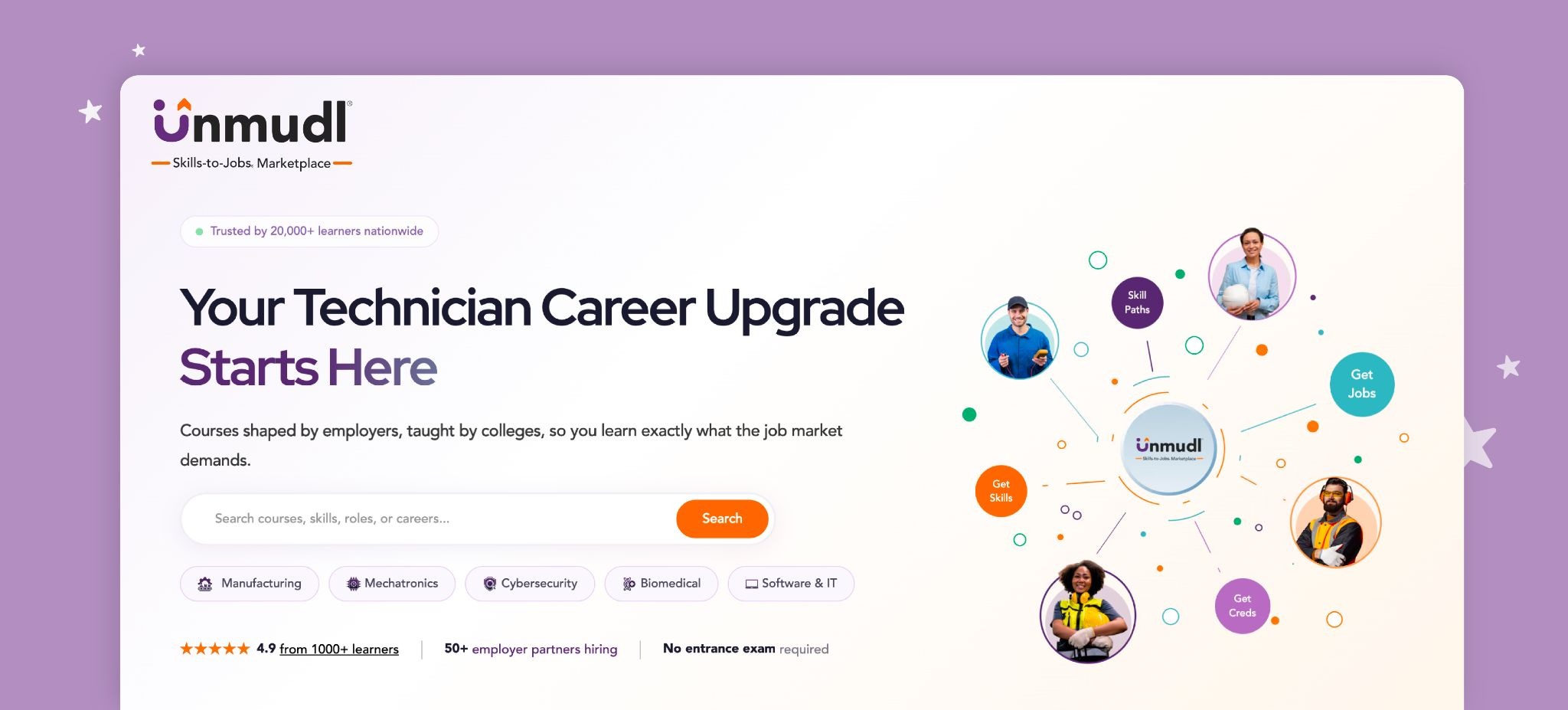
1. Unmudl: Instrumentation and Control Technician
Unmudl offers an online, on-demand instrumentation and control technician path for people who want real skills without pausing their job. Try the Instrumentation and Control Technician Skill Path for free before committing to the paid courses.
- Curriculum: Control systems, instrumentation fundamentals, industrial communications, safety, and PLC topics, via hands-on virtual simulations
- Format and price: 100% online, self-paced. Free trial, then $1,375 each for the Fundamentals of Control Systems course, Fundamentals of Instrumentation course, and the hands-on virtual lab for instrumentation and controls
- Learner ratings: 4.86 out of 5 across 46 reviews for Fundamentals of Control Systems, 4.8 out of 5 across 50 reviews for Fundamentals of Instrumentation
Pros:
- Fully online and self-paced
- Real virtual lab practice, not just theory
- ARM Institute endorsed, built with Amazon input
Unmudl is the best instrumentation and control technician training program for working adults who want online, self-paced training with virtual lab practice.
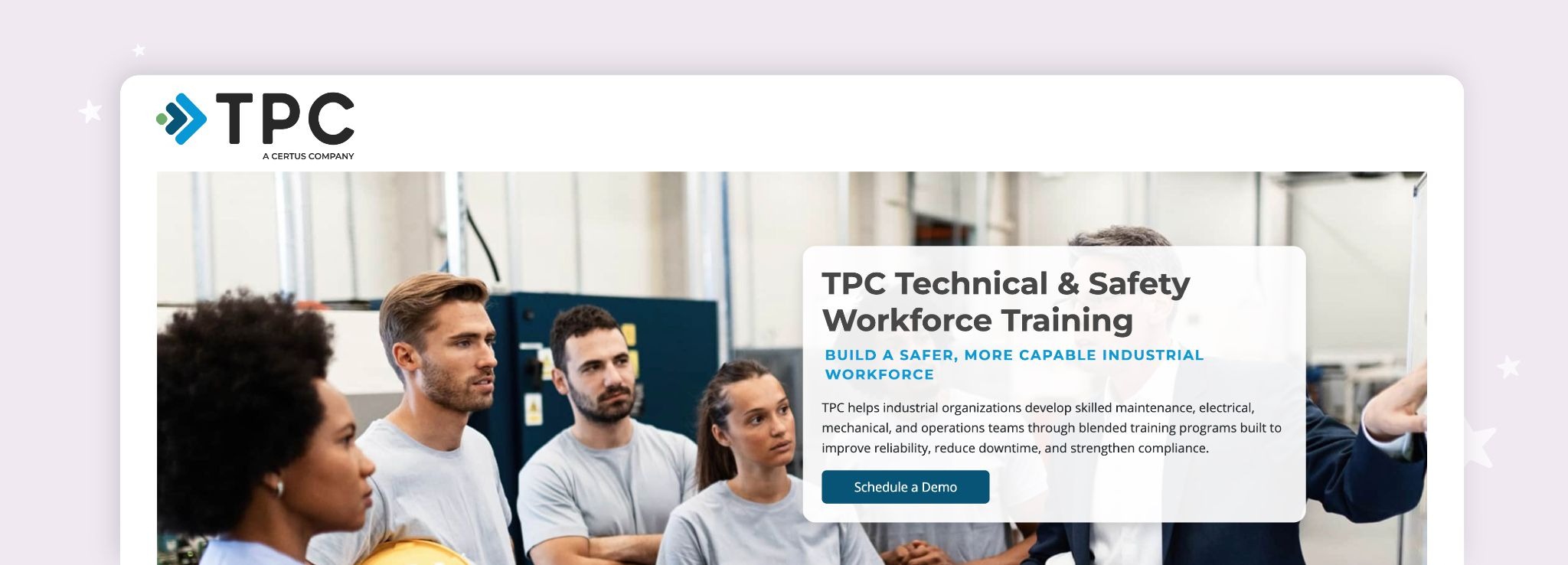
2. TPC Training: Instrumentation & Controls Technician
TPC Training positions this as an industrial team-training path rather than a single consumer certificate, for plant teams that need standardized skills across multiple people.
- Curriculum: Electrical fundamentals, control loops, process measurement, transmitters, calibration, PLCs, and troubleshooting, through a process control specialization
- Format and price: Online/self-guided, instructor-led, or blended. Pricing not found from an official source; enrollment goes through a demo or training advisor
- Trustpilot: 3.2 out of 5 from 1 review criticizing outdated content, too small a sample to draw a real conclusion from
Pros:
- Built for multi-site employer rollouts
- Strong fit for energy, utilities, and food and beverage
Cons:
- No public pricing, thin Trustpilot volume
- Lab intensity not clearly described
TPC Training is the best instrumentation and control technician training option for employer teams that need structured industrial training across one site or multiple sites.
Best Certification-Based Instrumentation and Control Technician Training
Certification-based training is not the same as beginner training. ISA's CCST credential is built for technicians who already have relevant field experience.
3. International Society of Automation: CCST Training and Exam Prep
ISA offers the Certified Control Systems Technician credential and CCST review courses that prepare experienced technicians for the exam, not beginners.
- Curriculum: Process control concepts, calibration, troubleshooting, P&IDs, loop checking, commissioning, and hazardous area classification
- Format and price: Classroom, virtual, instructor-guided online, or self-paced modular review. Main pricing not found from an official source; the exam fee, up to $415, is included for eligible learners
Pros:
- Strong industry credibility
- Multiple delivery formats
Cons:
- Not designed for complete beginners
- Requires relevant field experience
ISA is the best instrumentation and control technician training option for experienced technicians preparing for CCST certification.
Best College and Technical School Instrumentation Programs
College and technical school programs are usually stronger on hands-on labs, local employer connections, and formal credentials, though less flexible for shift workers or nonlocal learners. None of the seven programs below had a discoverable Trustpilot profile during research.
4. Bismarck State College: Instrumentation & Control Technology
Bismarck State's Instrumentation & Control Technology program trains technicians for power, process, and utility settings, online or on-campus.
- Curriculum: Installing, calibrating, and maintaining pressure, flow, level, and temperature instruments, plus control systems
- Format and price: Labs required on campus or at your workplace. Billed per credit, plus roughly $700 a year in textbooks and up to $820 in tools
Pros:
- Real flexibility for working learners
- Labs stay hands-on even online
Cons:
- Campus or workplace access required
- Full cost needs the tuition estimator
Bismarck State College is the best instrumentation and control technology program for learners who want online flexibility without skipping hands-on lab requirements.
5. Lee College: Instrumentation Technology
Lee College's Instrumentation Technology program leads directly into petrochemical, refining, manufacturing, and water treatment careers.
- Curriculum: Sensors, transmitters, actuators, wiring, PLCs, DCS, and calibration, with electrical or process instrumentation tracks
- Format and price: Strongly hands-on; exact format not clearly stated. $59 per credit hour in-district, up to $148 non-resident, plus fees
Pros:
- Direct pipeline into refining jobs
- Real specialization tracks available
Cons:
- Local access likely needed
- Cost depends on residency
Lee College is the best instrumentation technician training program for learners targeting petrochemical, refining, utilities, and process-industry jobs.
6. College of the Mainland: Instrumentation
College of the Mainland's continuing education Instrumentation program suits entry-level learners who need evening training around a day job.
- Curriculum: NCCER-based coursework covering pressure, temperature, flow, and level principles, calibrating instruments, reading P&IDs, PLCs, and troubleshooting
- Format and price: Face-to-face, two nights a week. Pricing not found from an official source
Pros:
- Evening schedule fits full-time work
- NCCER and OSHA 10 alignment
Cons:
- Face-to-face only, limits nonlocal learners
- Public pricing not listed
College of the Mainland is the best instrumentation training option for entry-level learners who want evening, face-to-face training with NCCER alignment.
7. Lamar Institute of Technology: Instrumentation Technology
Lamar Institute of Technology's Instrumentation Technology AAS is built around plant-floor calibration, troubleshooting, and process control for refineries and utilities.
- Curriculum: Electrical safety, AC/DC theory, calibration, transmitters, motor controls, PLCs, and control loop troubleshooting across 60 credits
- Format and price: Hands-on; no explicit delivery label stated. $80 per credit hour for Texas residents, $485 for non-residents
Pros:
- Deep plant-floor calibration and PLC relevance
- Full AAS credential
Cons:
- Full degree commitment
- Non-resident tuition much higher
Lamar Institute of Technology is the best instrumentation and control technician program for students who want a full AAS focused on plant-floor calibration, troubleshooting, PLCs, and process control.
8. Texas State Technical College: Instrumentation
TSTC's Instrumentation program is an in-person associate degree built around monitoring, controls, and troubleshooting.
- Curriculum: Systems that monitor flow, pressure, and temperature, coding the computers that run them, and troubleshooting
- Format and price: In-person, day classes, at TSTC's Waco campus. Tuition varies by tier; a recent resident total ran roughly $4,176 for 12 credits
Pros:
- Physical trainers mirror real equipment
- Tuition money-back guarantee
Cons:
- Single campus, in-person only
- Tuition varies by tier
Texas State Technical College is the best instrumentation and control technician training option for Texas students who want an in-person associate degree with industry-style physical trainers.
9. Great Basin College: Instrumentation Technology Certificate
Great Basin College's Certificate of Achievement in Instrumentation Technology is a true hybrid built with input from an industry advisory board.
- Curriculum: Measurement terminology, feedback control loops, ISA standards, device calibration, pneumatic instrumentation, and PID tuning
- Format and price: Hybrid, online lectures plus in-person labs at the Winnemucca Center. Roughly $147.75 to $237.50 per credit, plus fees
Pros:
- Real hybrid format with real labs
- Industry advisory board curriculum
Cons:
- In-person lab location required
- Cost depends on credit mix
Great Basin College is the best hybrid instrumentation technology program for learners who want online lectures plus in-person instrumentation labs.
10. SOWELA Technical Community College: Industrial Instrumentation Technology
SOWELA's Industrial Instrumentation Technology program is one of the most detailed, transparent college pages here, with three credential levels to choose from.
- Curriculum: Installing, maintaining, and troubleshooting measuring and controlling devices, PLCs, DCS, final control elements, and motor controls
- Format and price: Face-to-face, at SOWELA's Oakdale site. Roughly $8,036 for the AAS, $6,027 for the technical diploma, or $2,946 for the CTS option
Pros:
- Three credential levels available
- Transparent, program-level cost estimates
Cons:
- Location matters, face-to-face only
- Longer commitment for AAS or diploma
SOWELA is the best industrial instrumentation technology program for Louisiana learners who want multiple credential levels and transparent program cost estimates.
What Should You Consider When Choosing Instrumentation and Control Technician Training?
Delivery flexibility: Online, in-person, hybrid, self-paced, and employer-led programs all serve different lives, from Unmudl's on-demand courses to Great Basin College's true hybrid model.
Hands-on intensity: Lab work, virtual simulations, and calibration equipment matter more than most learners expect. Weak programs often stay too theoretical or vague about practical training.
Instrumentation depth: A strong program covers measurement and control of pressure, flow, level, and temperature, plus calibration, transmitters, and control valves.
Controls and PLC coverage: Instrumentation alone is not enough for most modern roles. You also want PLC basics, control loops, and HMI and SCADA context, which is exactly the ground Unmudl's control systems training covers.
Credential fit: A certificate of completion, a college certificate, an AAS, NCCER training, and ISA's CCST are not interchangeable. CCST suits experienced technicians better than beginners.
Pricing and transparency: Compare real tuition, per-course fees, and tool or book expenses. If a provider will not publish pricing, that is worth noting rather than guessing.
What Types of Instrumentation and Control Technician Training Programs Are There?
The main types are online skill paths, employer or team training, certification exam prep, continuing education certificates, hybrid certificate programs, and college AAS programs.
Online instrumentation and control technician training
Best for working adults who want to explore flexible, job-focused technical courses.
Employer or team-based instrumentation training
Best for manufacturers and maintenance teams that need standardized training across workers. Employers can partner with Unmudl to build technician pipelines.
Certification-based control systems technician training
ISA and CCST-style prep suits experienced technicians who already meet the eligibility requirements.
Continuing education instrumentation certificates
Usually shorter and career-focused, useful for entry-level learners who need practical skills fast.
Hybrid instrumentation technology programs
Combine online lecture flexibility with in-person lab requirements.
Associate degree instrumentation technology programs
Longer commitments, but with deeper lab access and stronger local employer alignment through Unmudl's community and technical college network.
What Skills Should Instrumentation and Control Technician Training Cover?
Process measurement
Pressure, flow, level, temperature, density, vibration, and chemical composition.
Calibration and test equipment
Calibrators, multimeters, oscilloscopes, pressure calibrators, and transmitter setup and testing.
Control loops and final control elements
Loop checking, control valves, regulators, actuators, and feedback control.
PLCs, HMI, SCADA, and DCS basics
Understanding how field instruments connect to logic, screens, and plant networks matters as much as the instruments themselves. If you want a deeper look, learn how PLCs work in automation.
Schematics, P&IDs, and documentation
Wiring diagrams, P&IDs, instrument drawings, loop sheets, and clean documentation habits.
Troubleshooting and maintenance
Root-cause diagnosis, preventive maintenance, signal diagnostics, and commissioning support.
Industrial safety and hazardous areas
OSHA fundamentals, electrical safety, hazardous-area classification, and intrinsic safety where relevant.
Instrumentation Technician Training vs PLC Training vs Control Systems Training
Instrumentation technician training
Focuses on field devices: measurement, calibration, process variables, control valves, and transmitters. Here is what an instrumentation technician does.
PLC technician training
Focuses on programmable logic controllers, ladder logic, I/O, automation sequences, and troubleshooting PLC-controlled systems.
Control systems technician training
Sits between instrumentation, PLCs, and process control, often including control loops, SCADA and DCS context, and commissioning. Here is what a control systems technician does.
I&E technician training
I&E usually means instrumentation and electrical, common in process industries. It overlaps closely with industrial maintenance technician training.
Final Recommendation: How to Choose the Right Instrumentation and Control Technician Training Program
Here is how to think about it:
Choose Unmudl if you want a flexible online skill path with real virtual lab practice.
Before you enroll anywhere, compare courses side by side on format, price, lab access, PLC and controls coverage, and credential type. If you are ready to start, Unmudl's skills-to-jobs marketplace is a solid place to begin.
FAQ About Instrumentation and Control Technician Training
What is instrumentation and control technician training?
Training covering instrumentation, controls, calibration, PLCs, sensors, process measurement, and troubleshooting. Most instrumentation and controls technician roles call for an associate degree plus hands-on experience.
What skills are included in instrumentation technician training?
Calibration, control loops, pressure, flow, level, and temperature measurement, P&IDs, PLC basics, control valves, and troubleshooting.
Can you complete instrumentation technician training online?
Yes, for theory, fundamentals, and simulations, though hands-on lab or workplace equipment experience still helps.
Is online instrumentation training enough, or do you need hands-on labs?
Online training builds foundational knowledge, but hands-on or virtual lab practice matters for calibration and wiring confidence.
How long does instrumentation technician training take?
Short online modules take hours, skill paths take weeks to months, continuing education programs run around 200 contact hours, and AAS programs take one to two years.
What is the difference between an instrumentation technician and a control systems technician?
Instrumentation focuses on field devices and measurement. Control systems roles often add PLCs, control logic, and broader automation troubleshooting.
What is the difference between PLC training and instrumentation training?
PLC training covers controller logic and automation sequences. Instrumentation training covers measuring and controlling real process variables through field devices.
Do you need a degree to become an instrumentation technician?
Not always. Some employers prefer an associate degree or certificate, but requirements vary by employer and experience.
What certificates are useful for instrumentation and control technicians?
Instrumentation certificates, NCCER instrumentation, SACA micro-credentials, and ISA's CCST for technicians who already have field experience.
Is CCST certification for beginners?
Not usually. ISA frames CCST as a professional credential for experienced technicians, not a first step into the field.
What jobs can you get after instrumentation and control technician training?
Instrumentation technician, I&E technician, control systems technician, PLC technician, and industrial maintenance technician are common outcomes, with electrical and electronic engineering technicians earning a median wage of $77,180 in May 2024. Browse jobs that match your training.
How much does instrumentation technician training cost?
Costs range widely. Short online courses cost far less than college certificates or AAS programs. Check official tuition or course pages rather than relying on estimates.
Learn In Demand Skills Employers Are Hiring For
Explore our career-ready "Mechatronics and Robotics Maintenance" designed with employers to help you get hired faster. Train for industrial maintenance in ~10–12 weeks, earn a certificate and get ready to interview for technician roles.


Frequently Asked Questions
What is instrumentation and control technician training?

What skills are included in instrumentation technician training?
Can you complete instrumentation technician training online?
What is the difference between an instrumentation technician and a control systems technician?
What is the difference between PLC training and instrumentation training?
Do you need a degree to become an instrumentation technician?
Last updated on:
July 6, 2026

.jpg)
