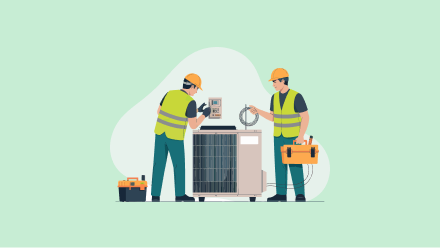
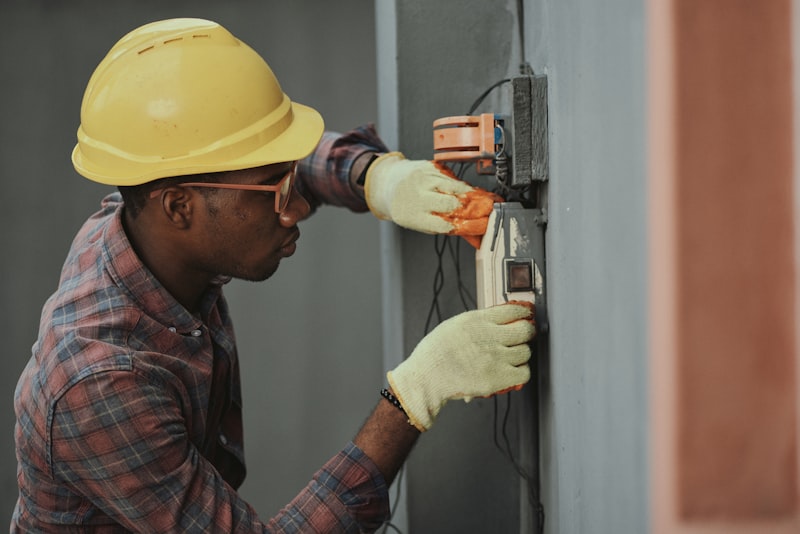
Industrial maintenance technicians earn a higher median wage than carpenters, painters, and construction laborers.
The role is significantly easier on the body than most trades, and new technology has made it shift further away from physical work.
The demand is surging, and maintenance tech is one of the fastest-growing careers.
Maintenance technicians out-earn most construction trades, face lower physical risk, and are in higher demand than ever. Here's why nobody's talking about it.
Electricians, plumbers, and welders are usually the faces of the trades. These are the careers that get cited whenever someone makes the case for skipping college.
But another trade quietly out-earns many of them, grows faster than most, and puts significantly less strain on your body over a 30-year career.
It just doesn’t get the same attention, even though nearly every industry that powers our economy depends on them.
Maintenance technicians might be the most underrated trade job that working Americans aren't considering seriously enough.
Here's why that's a mistake.
Browse Courses on Unmudl Today!
Start with Mechatronics and Robotics Maintenance, designed for warehouse associates and equipment operators. Unmudl's platform connects you to Career Choice funding and training that employers actually want.
According to the Bureau of Labor Statistics, in 2024, themedian annual wage for industrial machinery mechanics and maintenance workers was $63,510. The top 10% earn more than $92,730.
General maintenance and repair workers, the broader category, earn a median annual wage of $46,700. That’s comparable to construction, but with a much higher ceiling, depending on your specialization and sector.
Specializations such as:
Instrumentation and controls technicians earn, on average, $83,506 every year. The top 25% of earners make close to $100,000 or over.
Even general maintenance workers earn mean wages above $87,000 in sectors such as:
Pipeline Transportation of Crude Oil.
Electric Power Generation, Transmission, and Distribution.
The common factor among these high-paying maintenance technician careers is specialization. The broader your skills, the more you can switch specializations. The more technical your role, the more you can earn.
Technician careers have more specialization pathways than most trades, so you’ll always have opportunities to upskill.
We help people like you find new careers they love!
Contact us for a free consultation to begin your new career journey.
2. The Demand Gap is Bigger Than You Think
Here's an uncomfortable reality in the labor market right now:
Manufacturing is growing, but there aren't enough skilled workers for new jobs.
Deloitte and The Manufacturing Institute project up to 3.8 million net new manufacturing jobs needed between 2024 and 2033. Potentially ~1.9 million could go unfilled due to the skills gap.
There are also nearly 300 new clean technology and semiconductor manufacturing facilities expected to be completed by 2031, representing over $430 billion in investment.
That investment needs people who can keep operations running.
Specifically, it’s skilled production workers in high demand, including technicians, welders, and machinists. According to the National Association of Manufacturers, 72.1% of manufacturers say these are their #1 hiring need.
Of that group, maintenance technicians are arguably the most accessible entry point.
Welding and machining require more specialized training and carry more physical risk. Maintenance tech has a lower barrier to entry, a broader application across industries, and equally strong demand.
3. It's One of the Most Recession-Proof Careers
Skilled trades are generally stable. But maintenance tech has a specific quality that makes it even more resilient:
When budgets tighten, maintenance becomes more important, not less.
During tough times, businesses and consumers cut back on many expenses.
But when companies can't afford new equipment, they still need someone to keep the existing equipment running. When consumers need to spend less, they choose to maintain and repair rather than buy new.
In general, the most durable jobs tend to:
Meet essential needs, such as healthcare or basic household supplies.
Benefit from long-term trends, such as retirement waves and infrastructure development.
Involve skills that can't easily be automated or offshored.
Maintenance technicians fit this profile precisely.
1. Essential Needs
The manufacturing sector produces nearly every essential good. Logistics & distribution ensure people get them quicker and at a lower cost. Most critical infrastructure depends on someone to maintain it.
Even healthcare facilities need technicians to ensure that biomedical equipment doesn’t fail!
2. Long Term Trends
Every investment in manufacturing, energy, or infrastructure requires more technicians because of a simple operational reality:
A factory cannot run if its machinery is down. Any industrial budget needs to protect maintenance technicians. The alternative to paying a technician is losing production entirely.
Going a step further, let’s imagine there’s no growth in the sector.
We would still need more maintenance technicians to replace the large number of technicians aging out of the workforce!
Crucially, it can’t be offshored either. Local infrastructure requires local hands.
4. The Job Is Easier on Your Body Than Most Trades
If anything proves that maintenance technicians have the most underrated trade job, it’s that most people assume it is as physically demanding as other trades.
Why Other Trades Are More Demanding
Trades like construction, roofing, and concrete work are genuinely punishing over a long career. Research suggests that over 60% of people in the construction sector retire because of ill health.
Working at exposed, constantly changing outdoor job sites takes a toll on the body that compounds over decades. The unfortunate truth is that:
Construction workers have nearly double the comparative mortality rate of technicians.
This means that a construction worker is twice as likely to have their life cut short compared to someone working in a technical field.
Why Is It Different For Maintenance Technicians?
The difference in environments plays a huge role. Maintenance technicians work in more controlled settings, usually manufacturing facilities, commercial buildings, and fulfillment centers.
Senior technicians often shift to facility management, a physically sustainable career through one's sixties.
Beyond that, the role itself is evolving.
The integration of IoT devices, predictive maintenance software, and smart facility systems isshifting the work away from purely physical labor and toward technical troubleshooting.
A modern maintenance technician gets to work with their hands, but can spend just as much time interpreting data and diagnosing systems.
A few decades ago, the job looked very different. Today, it’s become more sustainable and intellectually diverse.
5. The Work Is More Interesting Than It Seems
Maintenance tech has an image problem. People picture someone on a factory line, bored with repetitive wrench work.
But it’s actually more like being a Swiss army knife. On any given shift, a maintenance technician might:
Troubleshoot an electrical fault
Interpret a blueprint
Diagnose a failing sensor
Repair automated equipment
Prevent a sudden production shutdown
You’re solving real problems, keeping everyone safe, and preventing costly breakdowns that disrupt vital supply chains.
The role also rewards genuine curiosity about how things work. In industrial settings, the complexity increases.
Technicians work with:
Programmable Logic Controllers
Robotic systems
Pneumatic equipment
Connected sensor networks
If you’re into advanced machinery, sophisticated systems, and hands-on problem-solving, you’ll find it more satisfying than most other trades.
6. Getting In Is Easier Than You Think
Maintenance technicians don't need a four-year degree. Many roles are accessible with a high school diploma and the right technical training.
It could take as little as a few months, depending on the program. On the other hand:
Becoming a licensed electrician or plumber typically requires 4 to 5 years of apprenticeship.
HVAC technicians generally need 3 to 5 years of training and apprenticeship before reaching journeyman status.
These are long runways, and they often come with years of lower apprentice pay before you're earning at the full rate.
Maintenance tech doesn't ask that of you. Short-term programs can cover the core foundation without a multi-year commitment.
The cost difference is just as stark.
The average four-year degree runs over $79,000 in tuition and fees. Trade school averages around $15,070 per year. Education debt and its pressure are a serious obstacle.
Certifications come in well below that. Many apprenticeship programs pay you from day one, so you're earning while you train rather than accumulating debt.
Skill-focused courses, shorter apprenticeships, on-the-job training, or a combination of them can get you to just about any maintenance technician position.
How Unmudl Gets You There
It’s exciting to find the right career. But the next steps can be confusing.
Unmudl was built specifically for this gap. The platform provides a clear, structured, and proven path to technical careers.
Unmudl courses are co-developed with industry-leading employers to fill real jobs. Most generic programs don’t have this focus, and that makes all the difference.
When Amazon, Siemens, Atlas Copco, or General Mills help build a course, the skills you learn are exactly what those employers are looking for when they hire. Unmudl's Skills-to-Jobs® marketplace connects you directly with 219 employers across manufacturing, logistics, healthcare, and beyond.
The other big difference is how these courses are delivered.
Online and self-paced, so working adults can complete them around their existing schedules.
Virtual labs provide hands-on simulation experience without requiring a physical classroom.
Career support includes help with job applications and interview preparation.
For Amazon employees specifically, Career Choice prepays up to 100% of tuition for eligible hourly workers, making Unmudl's courses accessible at no out-of-pocket cost.
The Bottom Line
Maintenance technician roles pay well, grow consistently, and are less physically punishing than most trades. It’s a direct pathway to working with the latest robotics technology or AI-powered control systems.
The profession has several advantages over other trades, and yet it’s overlooked because many job-seekers don’t know what the industry looks like today.
The demand for skilled workers is enormous, but the supply can’t keep up.
That's the definition of the most underrated trade job in the country.
Explore our career-ready "Mechatronics and Robotics Maintenance" designed with employers to help you get hired faster. Train for industrial maintenance in ~10–12 weeks, earn a certificate and get ready to interview for technician roles.




.svg)










.webp)