What is a Telecommunication Technician?
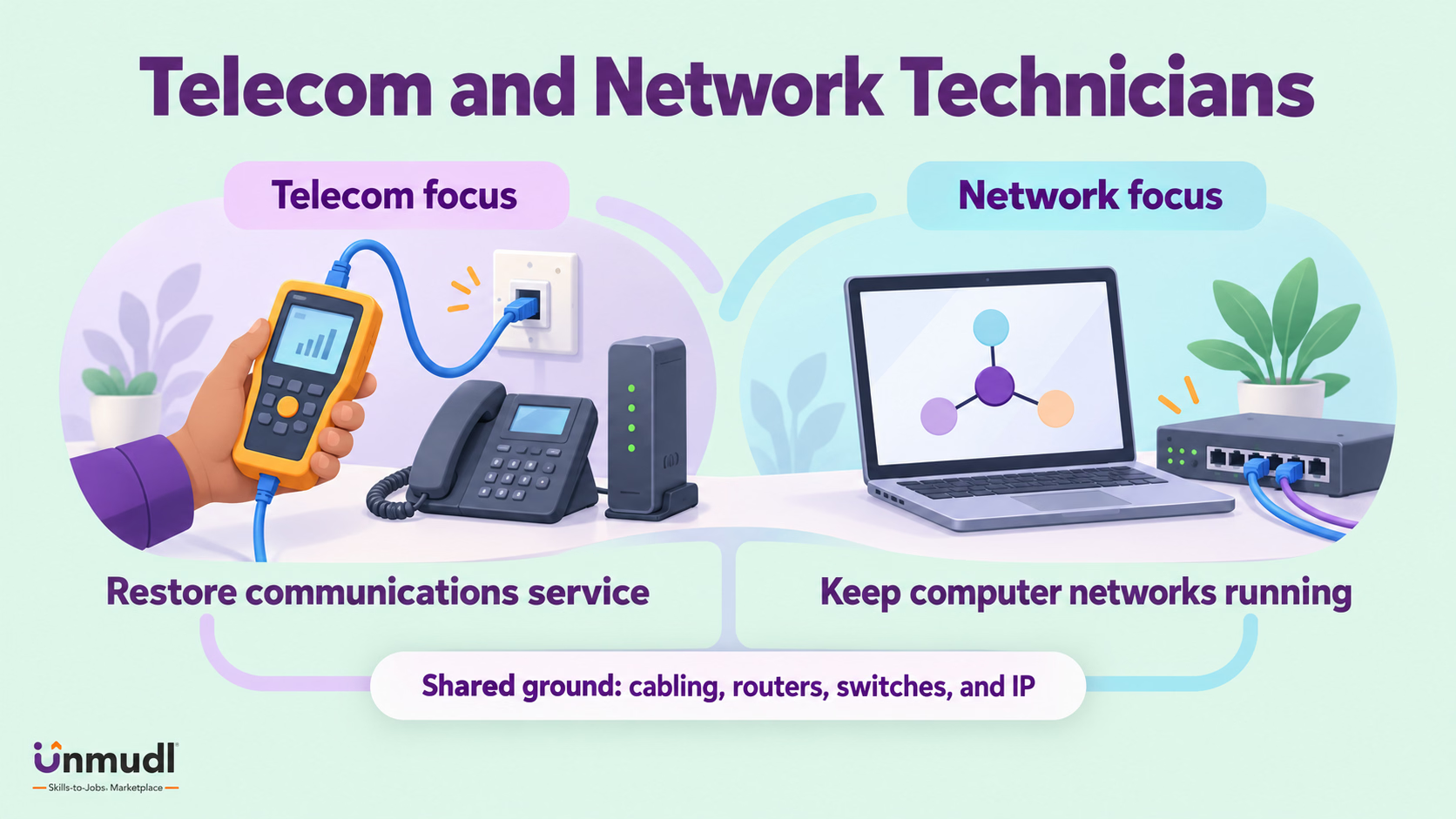
A telecommunication technician is an installation, maintenance, and repair worker who sets up, tests, and restores communications equipment at customer properties and inside communications facilities. The occupation appears in United States labor statistics as telecommunications equipment installers and repairers, and the qualifier except line installers separates equipment work from outside cable work. The boundary of the occupation comes from the system served, not from the job title. A telecommunication specialist carries a context-dependent title that marks a different emphasis rather than a higher rank. The equipment occupation counted 140,920 employees in the United States in May 2025. The count comes from the Occupational Employment and Wage Statistics release that the Bureau of Labor Statistics (BLS) published on May 15, 2026. The counted workers share one work cycle.
What Does a Telecommunications Technician Do?
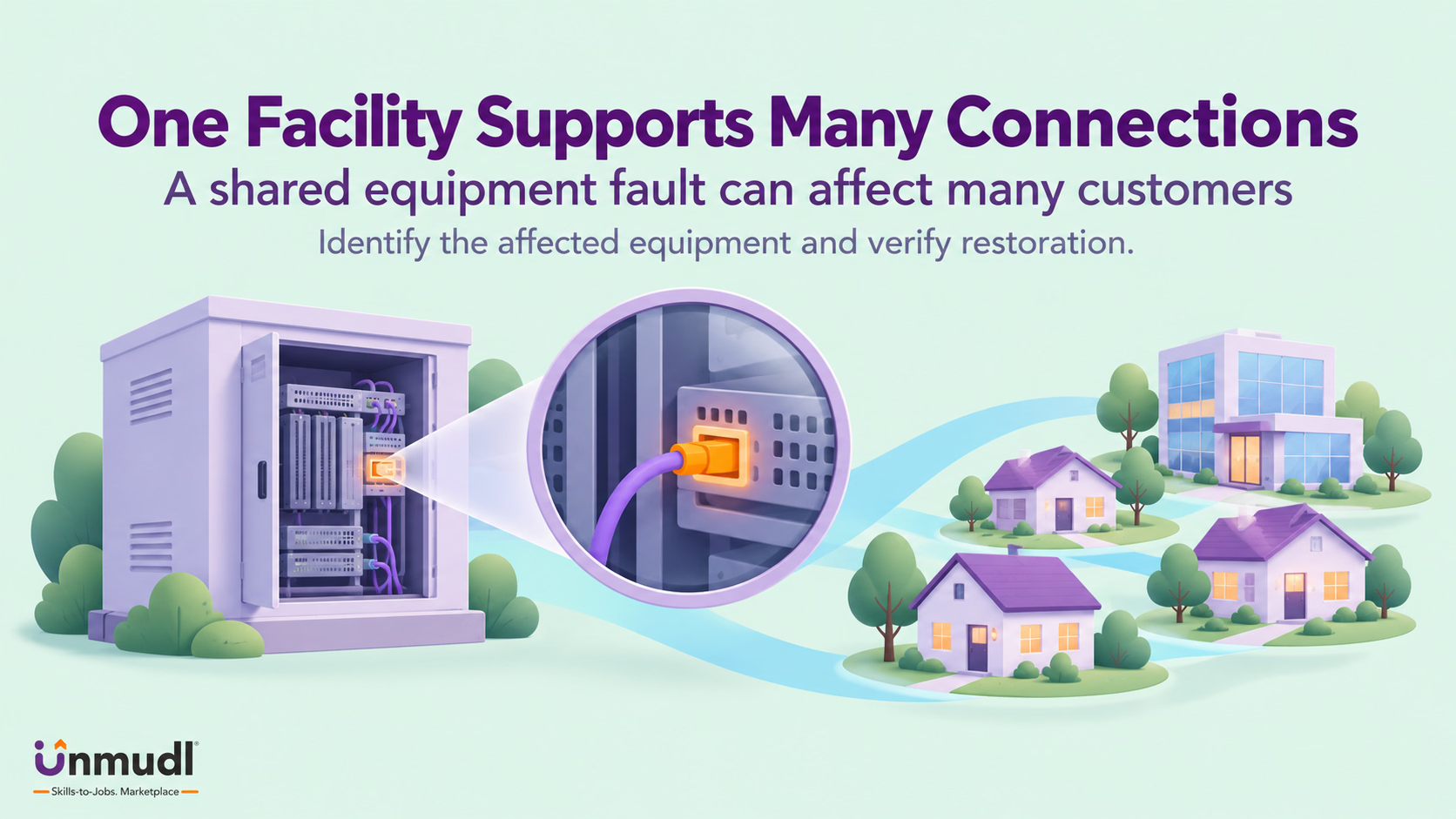
A telecommunications technician makes a communications service work at the equipment, connection, or infrastructure level. The work cycle of the technician runs through six stages. The stages are understanding the service request, identifying the affected equipment, installing or diagnosing, making the authorized repair, testing the result, and documenting the handover. The diagnostic stage carries the most weight, since a telephone that stops working rarely needs replacement. Telecom work in a customer-facing job adds an explanation of the restored service to the subscriber. A telecom tech in a facility job hands the restored equipment to another team instead. The setting and the system separate one worker from another, and that separation defines the types.
What Are the Types of Telecommunication Technician?
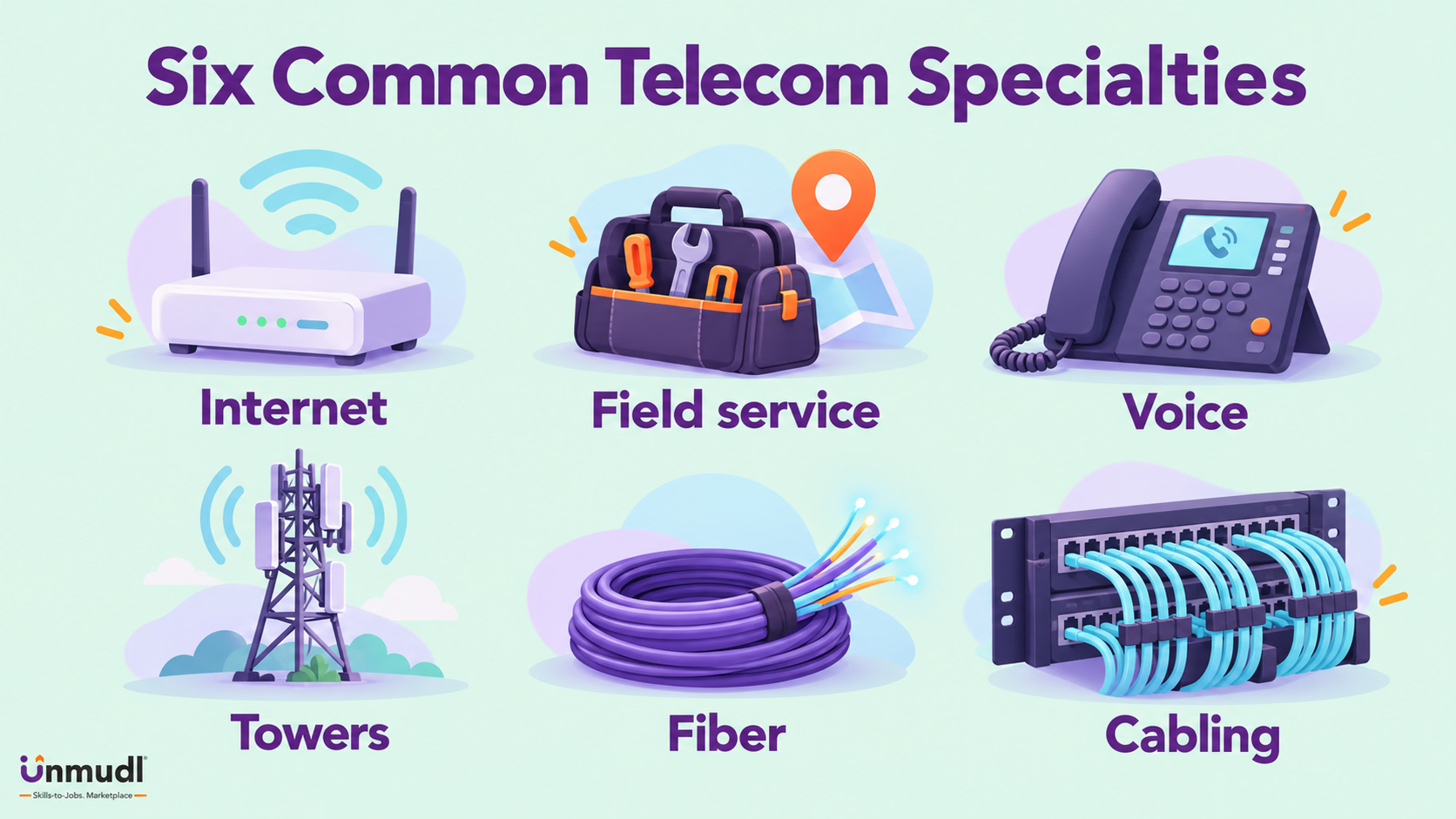
There are six main types of telecommunication technician based on the system serviced or the setting of the service. The main types are internet technician, telecommunications field technician, telephone technician, telecommunications tower technician, fiber-optic technician, and telecommunications cabling and wiring technician, which are briefly discussed below. Two other types, the central-office equipment technician and the two-way radio technician, bring the total to eight. The table below compares the six main types by work object and setting.
Type | Work Object | Setting |
|---|---|---|
Internet technician | Modems, gateways, optical terminals | Customer property |
Telecommunications field technician | Equipment named on the work request | Dispatched site visit |
Telephone technician | Endpoints, extensions, voicemail, IP voice gear | Customer voice system |
Telecommunications tower technician | Antenna system and site radio equipment | Elevated radio site |
Fiber-optic technician | Fiber cable, splices, and optical path | Buildings and outside plant |
Telecommunications cabling and wiring technician | Cable paths, outlets, patching | Assigned building |
Common misreading | A job title fixes the type | The system and the setting fix the type |
1. Internet Technician
An internet technician is a service technician who gets internet access working at the service connection and the customer equipment. The customer equipment includes cable modems, gateways, and optical network terminals. The benefit of the role is a fault located before any part is replaced. Technicians test the physical connection first and the service parameters second.
2. Telecommunications Field Technician
A telecommunications field technician is a dispatched technician who travels to the location where an installation or a repair is required. The word field describes the deployment, since the assigned equipment sets the scope of the visit. The value of the dispatch is a site observation joined to remote support. Technicians review the work request, run the test, and record the result.
3. Telephone Technician
A telephone technician is a voice-systems technician who maintains telephone endpoints, extensions, voicemail, private branch exchange systems, and internet-protocol voice equipment. The purpose of the voice work is a call placed, received, and routed correctly, not merely a powered handset. Technicians support the voice service without administering every network function.
4. Telecommunications Tower Technician
A telecommunications tower technician is a radio-site technician who installs and tests antennas, feed lines, connectors, mounts, and the associated cellular equipment. Tower access forms one setting within the radio and cellular occupation, and not every radio technician climbs. The payoff of a correct antenna installation is a site that keeps its radio connection. Technicians follow the approved access plan, measure return loss, and document the readings.
5. Fiber-Optic Technician
A fiber-optic technician is a physical-connection technician who prepares fiber cable, splices or terminates the fiber, and measures the optical path. The reward of correct fiber preparation is a usable optical link with any excess loss located quickly. Fiber work takes place inside buildings and in the outside plant, apart from lineman work. Technicians test the finished link against the project loss budget.
6. Telecommunications Cabling and Wiring Technician
A telecommunications cabling and wiring technician is a premises-infrastructure technician who installs the cable paths, outlets, terminations, and patching inside an assigned building. The advantage of an accurately labeled cable path is a dependable physical connection and a faster isolation of any later fault. Installing the cabling confers no responsibility for network routing. Technicians verify the specified cable and preserve its label during the pull.
Reading the six types together lets a candidate pick a specialty by system and setting, and every specialty runs the same duties.
What Are the Duties of Telecommunication Technician?
There are six main duties of a telecommunication technician inside one work cycle, in the order in which a service goes live. The main duties are installing communications equipment, configuring the requested service, terminating and splicing communications cabling, testing and verifying performance, diagnosing and locating faults, and repairing faulty parts. Three other duties of inspection, documentation, and handover bring the total to nine. A telecommunications job description draws its task list from this cycle, and a telecommunications technician job description names the system for each duty. Each main duty is defined below.
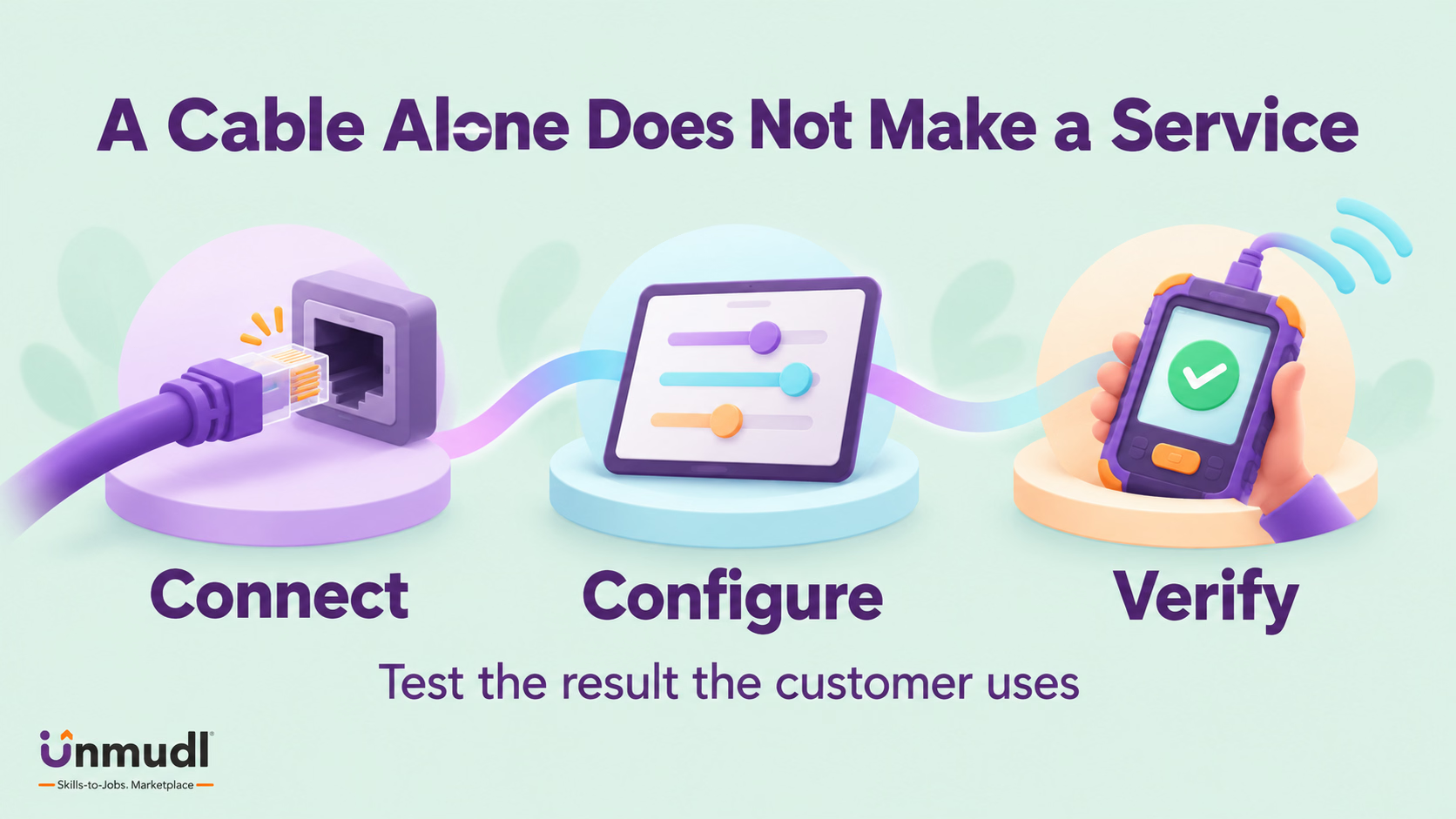
1. Installing Communications Equipment
Installing communications equipment is the duty of placing, mounting, connecting, and preparing the assigned hardware for operation. The hardware ranges from telephone apparatus and distribution connections to communications processors. The result of the installation is a service design turned into a physical connection that can be tested. Technicians confirm the work order and the connection points before mounting anything.
2. Configuring the Requested Service
Configuring the requested service is the task of applying the settings that let the installed equipment deliver its intended function. Physical connectivity alone establishes no registration, addressing, or call behavior, and the configuration supplies those three. The gain from the configuration is a working result instead of a connected but silent device. Technicians make only the authorized changes and test the outcome the user sees.
3. Terminating and Splicing Communications Cabling
Terminating and splicing communications cabling is the work of creating or restoring the physical cable path with the technique that suits copper, coaxial cable, or optical fiber. Correct routing and termination preserve the signal path and keep the installation identifiable. The value of the cabling duty is an acceptance test planned together with the installation. Technicians follow the cable plan and respect the manufacturer's installation limits.
4. Testing and Verifying Performance
Testing and verifying performance is the step of measuring whether an installed or repaired connection meets its technical and service requirements. The measurement separates a system that appears connected from a system that satisfies its specification. Copper, optical, radiofrequency, and service-level tests answer different questions, and one test never replaces another. Technicians set the reference conditions, run the test, and retain the result.
5. Diagnosing and Locating Faults
Diagnosing and locating faults is the stage of isolating the failed component, connection, configuration, or segment behind a reported problem. A diagnosis points the repair at the cause instead of at the symptom. The method compares affected equipment with unaffected equipment and narrows the fault with logs and measurements. Technicians escalate an unresolved upstream fault rather than change equipment outside their scope.
6. Repairing Faulty Parts
Repairing faulty parts is the act of correcting the diagnosed fault by restoring a connection or replacing the defective component, then retesting the result. The retest proves that the intervention resolved the fault, and the recorded result ties the repair to the equipment identifier. Not every failure needs a new cable. Technicians clean an optical connector as a controlled process and repeat the required test afterward.
Running the six duties in order turns a work request into a verified service at whichever site the employer assigns.
Where Does a Telecommunication Technician Work?
A telecommunication technician works for a communications provider, an installation contractor, a college, a public agency, or another organization that operates its own communications systems. The physical workplace ranges across a customer property, an equipment facility, a campus, an outside-plant route, and a radio site. Customer-premises work places the technician beside the user, while tower work adds elevated access and radiofrequency exposure. Travel, weather, and night assignments vary by setting. Telecommunications work inside a provider divides into customer field service, network maintenance, construction, and remote support. Phone company jobs name an employer sector that holds those four functions along with roles outside the occupation. The 5G jobs of a cellular build-out name a deployment activity on site equipment rather than a separate occupation. Every setting hires through the same entry preparation.