What is a Mechanical Technician?
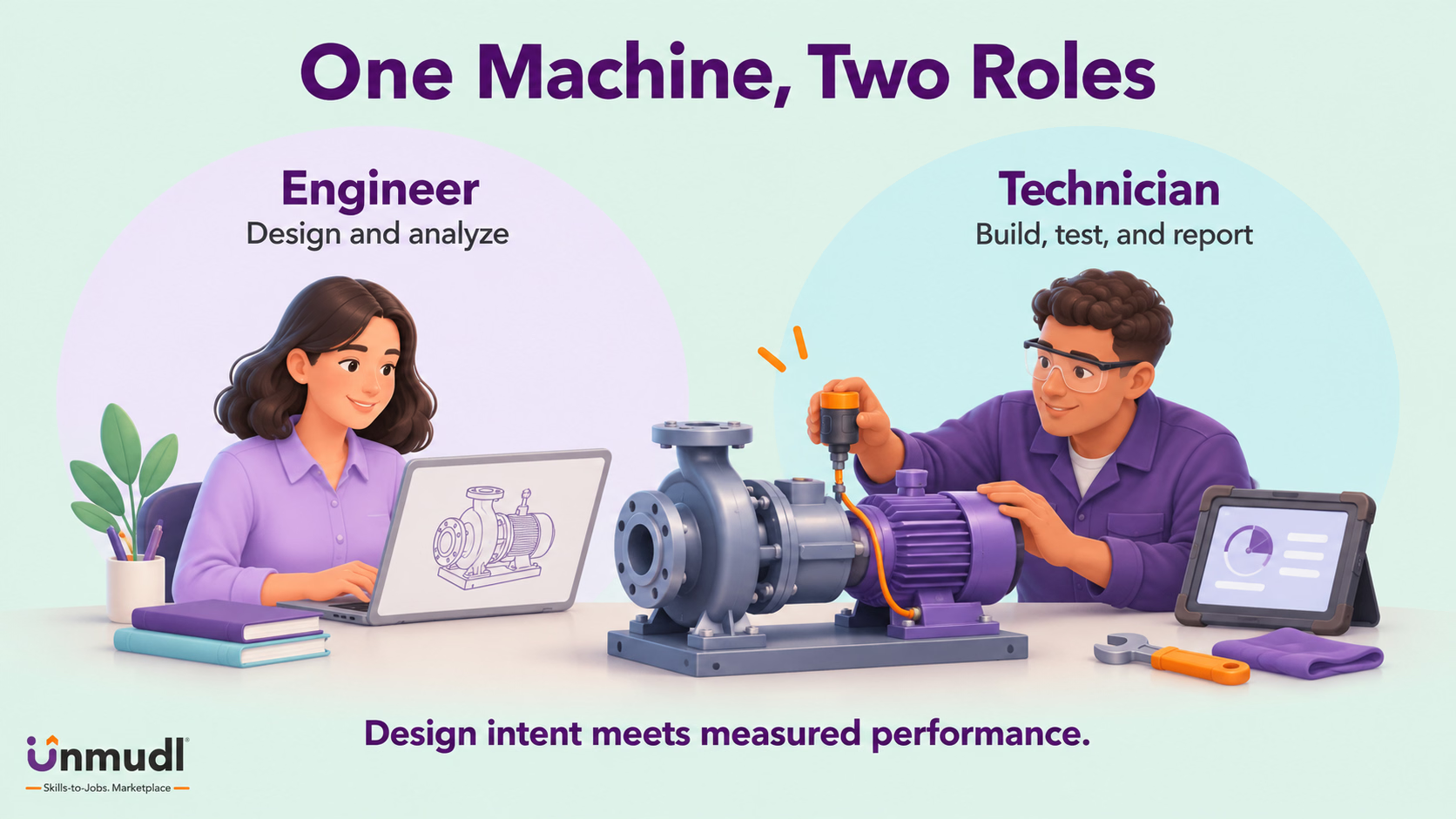
A mechanical technician is a skilled support worker who modifies, develops, tests, and adjusts machinery and equipment by applying mechanical engineering theory under the direction of engineers. A mechanical technician holds the hardware end of a design project. The engineer owns the calculation, and the technician owns the assembly, the instrumentation, and the measured result. The measured result returns to the engineer as recorded data. The occupation is distinct from the mechanical engineer, who holds an engineering degree and creates the design. The occupation is equally distinct from the automotive mechanic, who services vehicles rather than industrial machinery. Occupational handbooks file the role under mechanical engineering technologists and technicians, a category that the U.S. Bureau of Labor Statistics (BLS) describes as helping mechanical engineers design, develop, test, and manufacture machines and other devices.
What Does a Mechanical Technician Do?
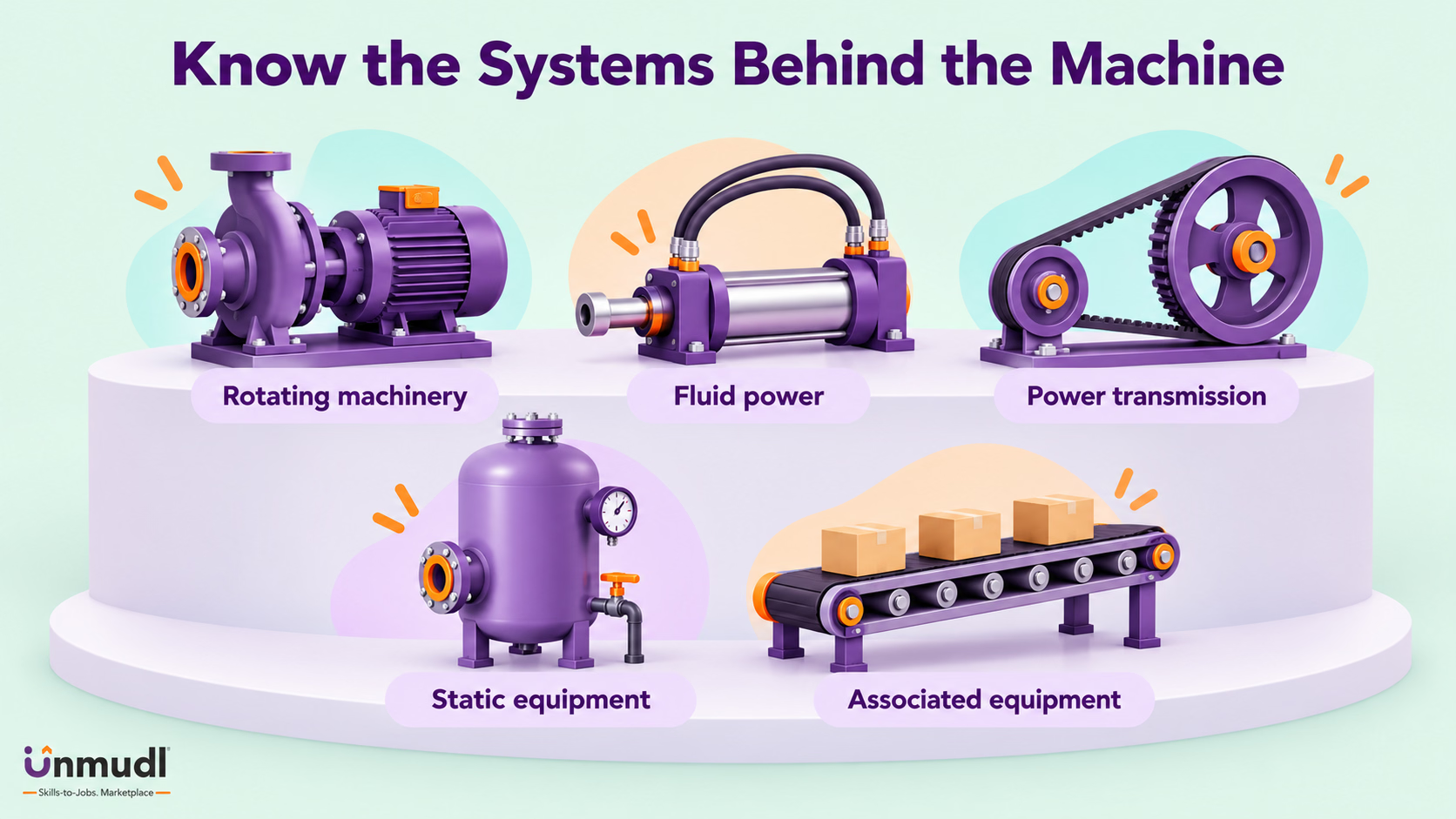
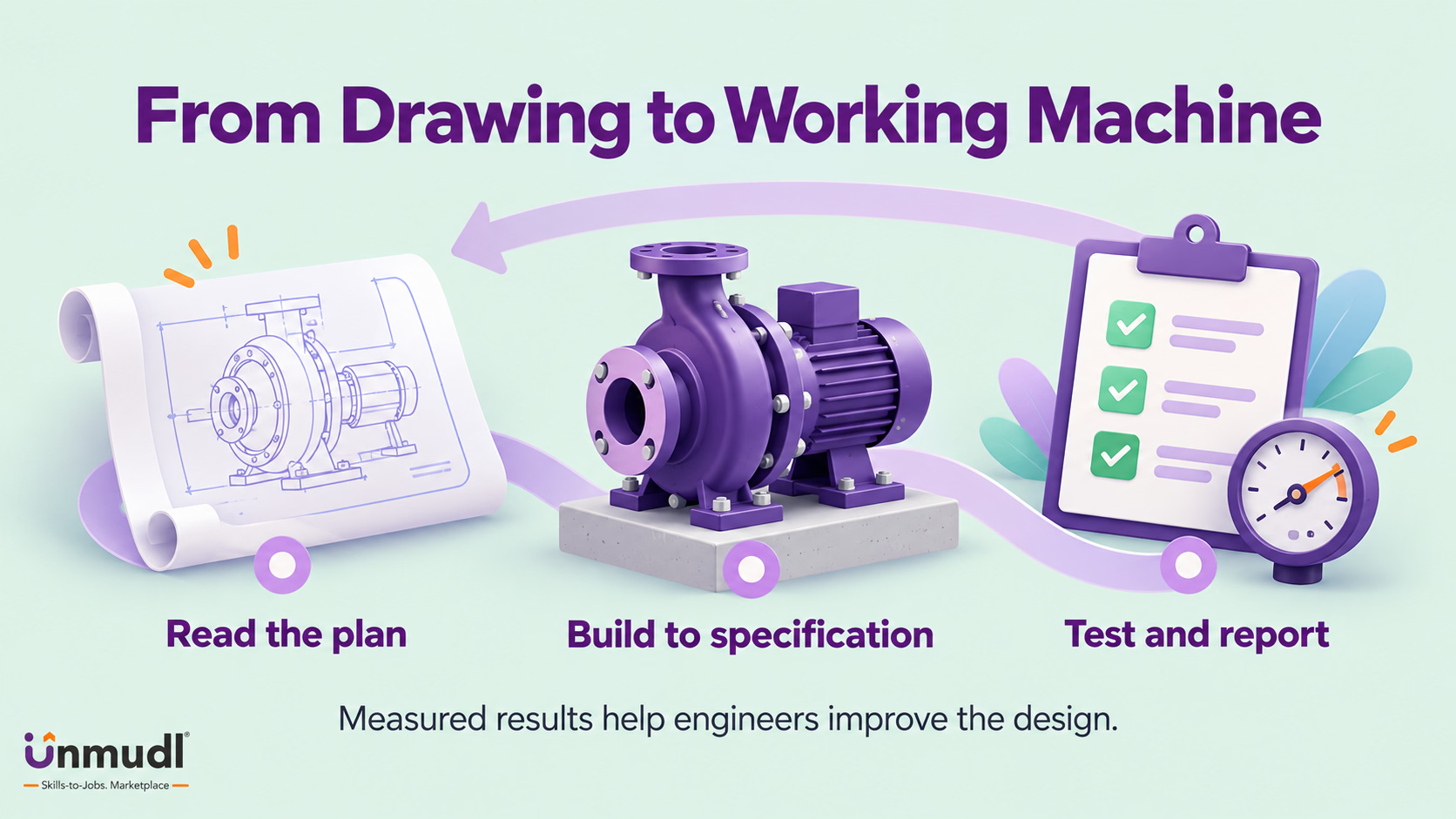
A mechanical technician implements the designs that engineers create and maintains the mechanical systems those designs produce, so that equipment performs as intended. The mechanical technician job begins with a blueprint or a test instruction. The instruction leads to assembling the parts or setting up the test equipment, and the set-up ends in recorded performance data. Recorded performance data feeds back into the design, which is how the technician improves a product without drawing it. A vibration test on a pump illustrates the sequence: the technician mounts the sensors, runs the pump against its specification, and documents the outcome. In a manufacturing plant the same worker assembles and calibrates machines. In a research laboratory the worker builds prototypes. In a power station the worker replaces valves and filters and diagnoses failures before they halt generation. Engineers, electricians, and operators coordinate with the technician on each task, which keeps the work safe and the schedule intact. The task mix changes with the equipment, and the equipment sorts the occupation into its types.
What Are the Types Of Mechanical Technicians?
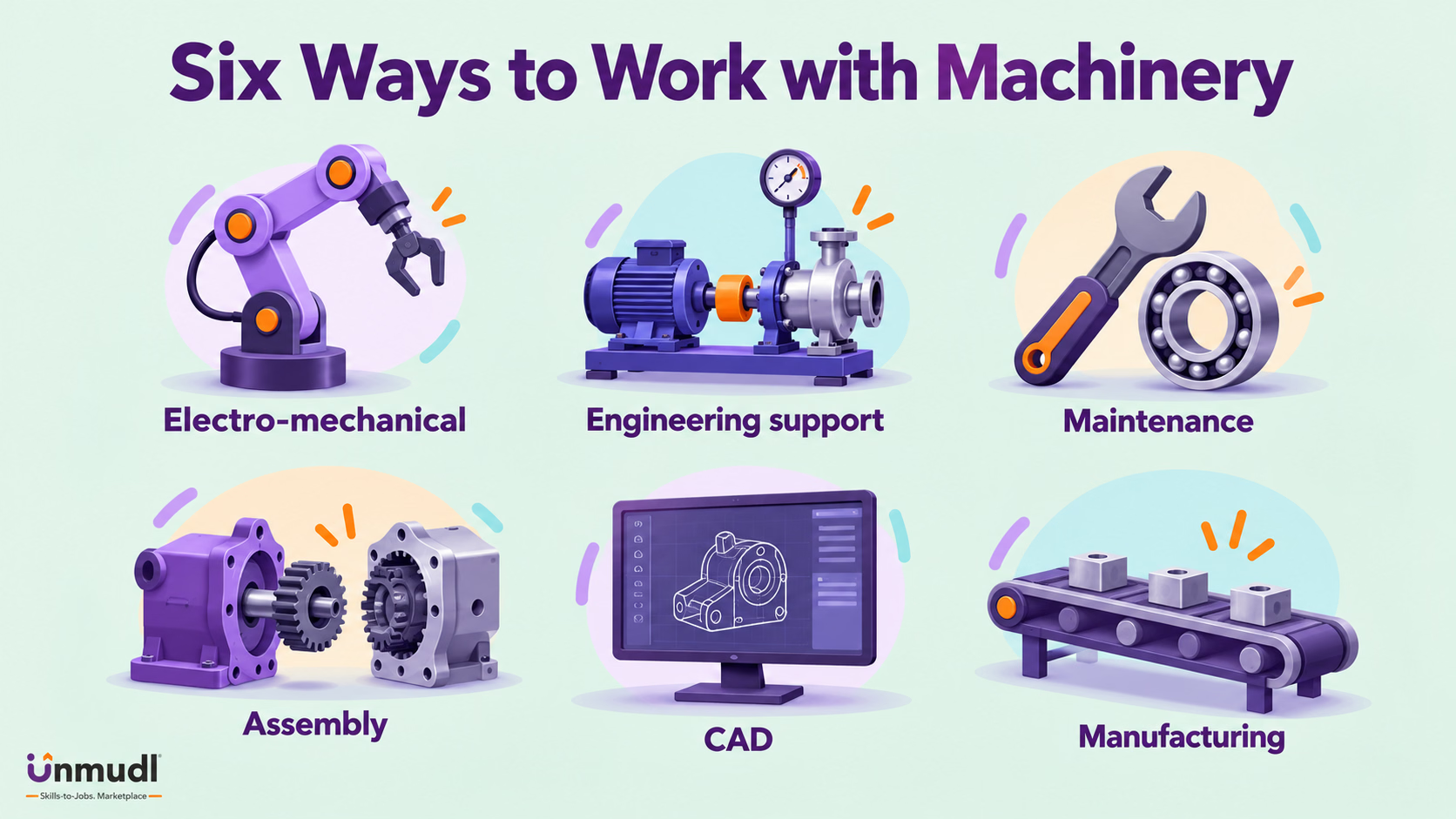
There are six main types of mechanical technicians, divided by the system they handle and the setting they work in. The types are the electro-mechanical technician, the mechanical engineering technician, the mechanical maintenance technician, the mechanical assembly technician, the mechanical CAD technician, and the manufacturing engineering technician. The table below sets the six types side by side on the system handled, the work setting, and the defining task. Each type is described below.
Type | System Handled | Work Setting | Defining Task |
|---|---|---|---|
Electro-mechanical technician | Equipment combining mechanical and electrical components | Computer-controlled production systems | Installs, maintains, and repairs across gears, motors, and circuits |
Mechanical engineering technician | Prototypes and instrumented test rigs | Engineering workshop bench | Prepares design layouts, assembles prototypes, and conducts tests |
Mechanical maintenance technician | Turbines, compressors, pumps, and valves | Plant | Installs, services, and repairs on a preventive and a corrective side |
Mechanical assembly technician | Engines and gearboxes | Production line | Reads schematics, fits parts to tolerance, and calibrates finished assemblies |
Mechanical CAD technician | Drawings of components and assemblies | Engineering office | Translates an engineer's concept into fabrication-ready drawings |
Manufacturing engineering technician | Assembly-line equipment and robotic welders | Factory floor | Lays out the floor, sets up equipment, and troubleshoots the line |
Shared base | One set of mechanical competencies | Every setting above | One two-year credential serves all six types |
1. Electro-Mechanical Technician
An electro-mechanical technician is a specialist who installs, maintains, and repairs equipment that combines mechanical and electrical components. The equipment includes robotic assembly machines and computer-controlled production systems. The electro mechanical technician therefore works across gears, motors, and circuits. Working across both disciplines gives this type the widest scope of any type in the set.
2. Mechanical Engineering Technician
A mechanical engineering technician is the classic engineering-support role that prepares design layouts, assembles prototypes, and conducts tests for engineers. The layouts come from drafting tools and three-dimensional computer-aided design (CAD) software. The prototypes come from the workshop bench and the tests from instrumented rigs. Careful blueprint reading and thorough documentation decide the quality of this type's work.
3. Mechanical Maintenance Technician
A mechanical maintenance technician is a plant-based role that installs, services, and repairs turbines, compressors, pumps, and valves. Lubrication, filter changes, and seal replacement form the preventive side of the work. Realigning a motor after a failure forms the corrective side. Keeping production running is the outcome that measures this type.
4. Mechanical Assembly Technician
A mechanical assembly technician is a production-line role that reads assembly schematics, selects and fits parts, and calibrates finished assemblies such as engines and gearboxes. Fitting parts to tolerance separates this type from an assembly-line worker, since a gearbox tolerates no loose clearance. Quality checks at every stage keep the assembled unit within its engineered specification.
5. Mechanical CAD Technician
A mechanical CAD technician is a documentation role that translates an engineer's concept into fabrication-ready drawings of components and assemblies. The drawings carry the dimensions and tolerances the workshop needs. The workshop builds from the technician's file rather than from the engineer's sketch. Drafting standards, not hand tools, are the instruments of this type.
6. Manufacturing Engineering Technician
A manufacturing engineering technician is a process role that lays out the floor, sets up the equipment, and troubleshoots the assembly line. Installing and tuning a robotic welder to its production target is the task that fills this type's day. Process simulation software and shop-floor data systems support the tuning.
Reading the six types together shows that one set of mechanical competencies serves different equipment in different settings. Those competencies are exercised through a fixed set of duties.
What Are the Duties Of a Mechanical Technician?
The main duties of a mechanical technician are six hands-on tasks that carry an engineer's design into a working machine and keep that machine in service. A mechanical technician job description lists the duties as evaluating design specifications, preparing assembly layouts, assembling mechanical parts, setting up and conducting tests, comparing test results with specifications, and installing and maintaining equipment. The six duties are explained below.
1. Evaluating Design Specifications and Blueprints
Evaluating design specifications is the opening duty of every assignment, because the technician reads the engineering drawing and the project instruction before touching a part. The drawing states the component requirement. The instruction states the assembly sequence. Reading both aligns the work with the design objective and with the safety standard attached to it.
2. Preparing Assembly Layouts and Drawings
Preparing assembly layouts is the planning duty that converts the specification into a build plan on CAD or drafting tools. A jig drawn for assembling a gearbox is one such layout. The layout fixes the order in which the parts meet. Precision at this stage removes assembly errors before they reach the bench.
3. Assembling and Fabricating Mechanical Parts
Assembling mechanical parts is the build duty that produces the component or the subassembly with machine tools, welders, and hand tools. An engine block or a gear train is built to its specification by following the standard operating procedure. Verifying fits and clearances at each step confirms that the assembly matches the drawing.
4. Setting Up and Conducting Tests on Machinery
Setting up tests is the measurement duty that installs instrumentation on equipment and runs experiments to measure performance or detect defects. A stress test on a material and a performance run on an engine are two such experiments. Calibrated instruments and careful data collection make the recorded result trustworthy.
5. Comparing Test Results with Specifications
Comparing test results is the analysis duty that checks the recorded data against the design goal once the test ends. A pump that fails at high temperature prompts a recommendation for a different seal material. Recommending the modification turns a measurement into a design improvement.
6. Installing, Troubleshooting, and Maintaining Equipment
Installing and maintaining equipment is the service duty that keeps an engineer's design working after it is built. Routine lubrication and tightening prevent faults. Systematic checks diagnose vibration or leaks when a fault appears. Replacing a worn bearing in a conveyor drive or calibrating a sensor on a robot closes the maintenance cycle.
Performing the six duties, with the cost and material calculations that accompany them, is the full set of mechanical technician skills an employer expects in a plant, a laboratory, or an office.
Where Does a Mechanical Technician Work?
A mechanical technician works primarily in factories and in research and development laboratories. Plant, offshore, manufacturing, and engineering-office settings cover the full range of the occupation. The manufacturing setting places the technician beside assembly-line machinery and production engineers. The plant setting, at a power station for instance, puts the technician beside large engines and turbines whose upkeep decides whether electricity keeps flowing. The offshore setting sends the technician to an oil, gas, or marine platform. A mechanical technician offshore job there covers frac pumps, diesel engines, transmissions, and hydraulic systems. The engineering-office setting, co-located with a lab or a workshop, stations the technician at a test fixture or a computer simulation. Heavy machinery runs through every setting, and the technician bridges engineering design and practical implementation wherever the machinery stands. Entry to every one of those settings runs through the same training route.