What is an HVAC/R Technician?
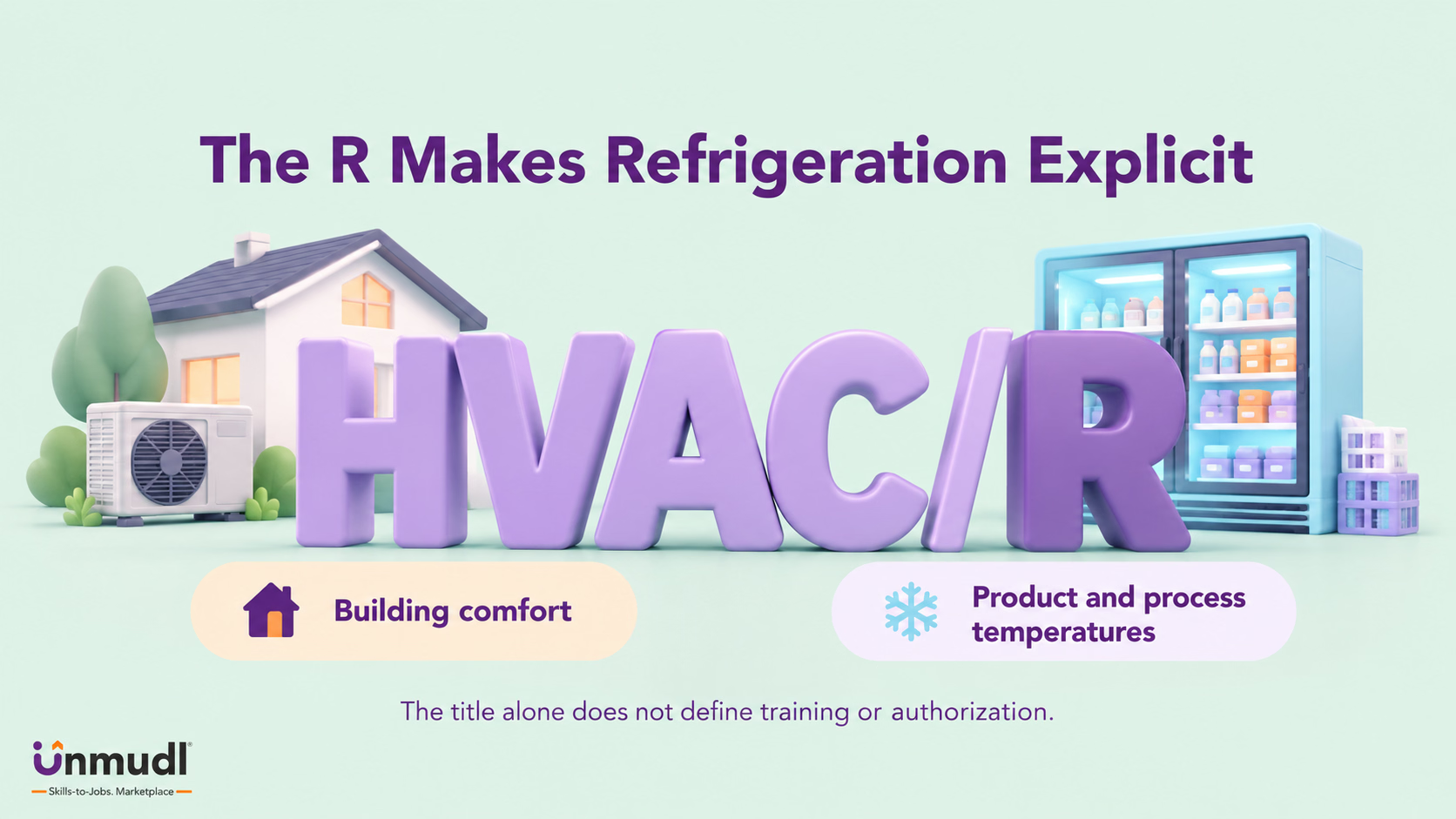
An HVAC/R technician is a maintenance and installation worker who keeps heating, cooling, ventilation and refrigeration systems operating within the conditions a building or a stored product requires. An HVAC/R technician works on the equipment itself, including furnaces, heat pumps, refrigerated storage and the thermostats that run them. The meaning of the HVAC technician title therefore sits with the equipment and not with any single certificate.
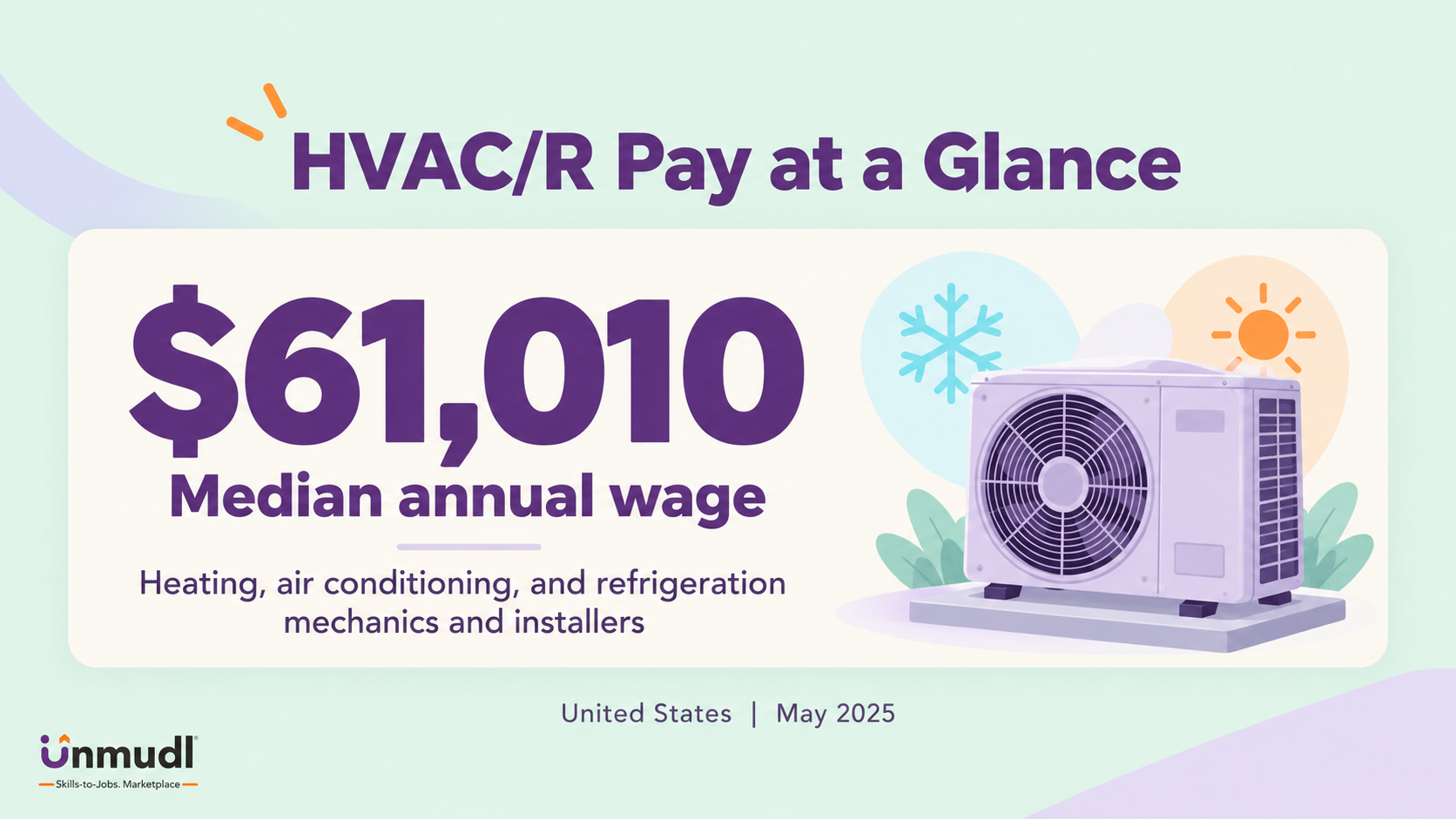
Occupational classification is the federal coding that groups heating, air-conditioning and refrigeration mechanics together with installers under one occupation. The United States Bureau of Labor Statistics (BLS) Occupational Outlook Handbook, updated on August 27, 2026, records a median wage of $61,010 per year for the occupation in May 2025.
What does an HVAC/R Technician do?
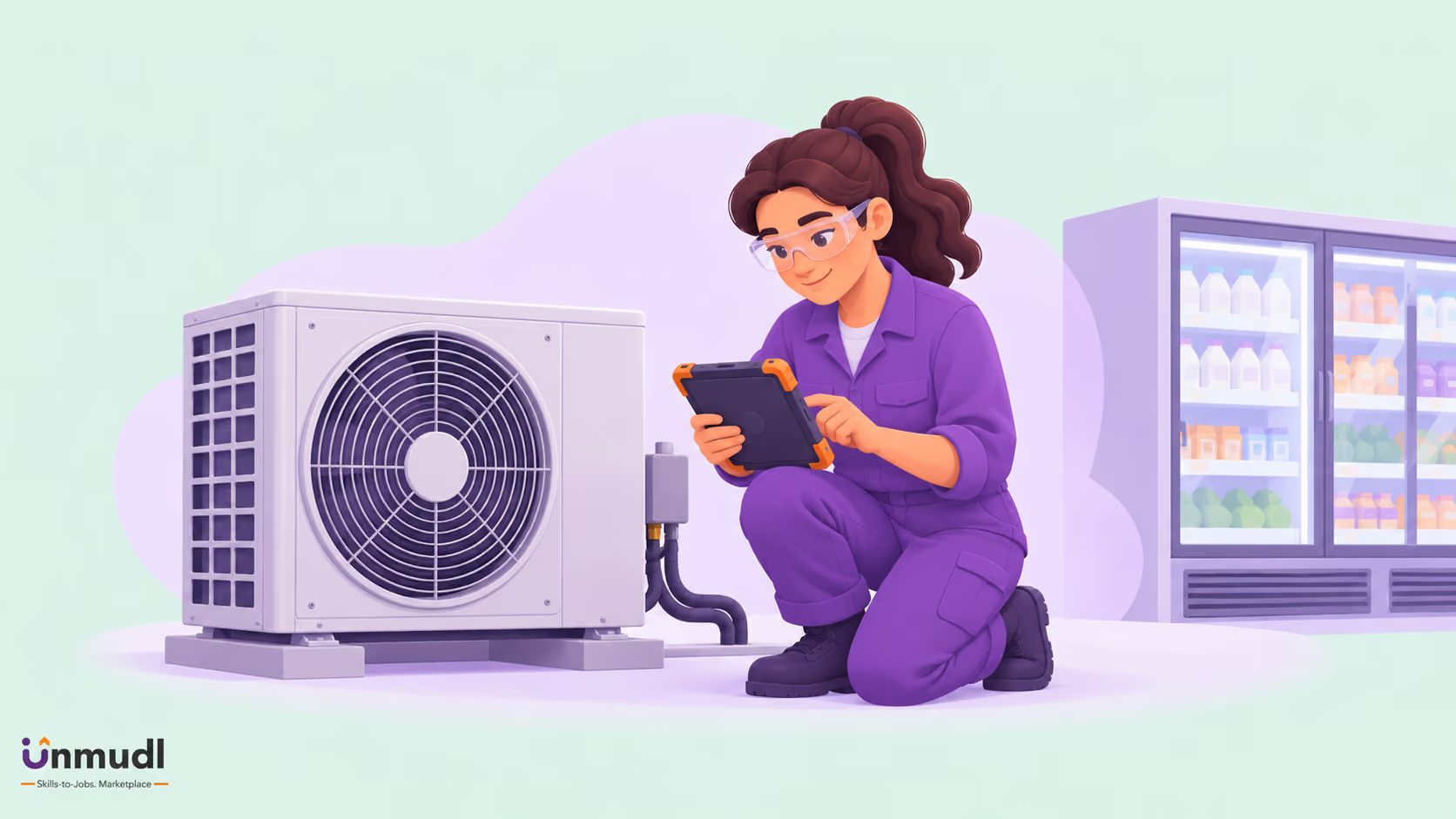
An HVAC/R technician turns a cooling complaint, a maintenance schedule or an installation order into verified technical work on the equipment. The work follows one cycle. The technician records the complaint, identifies the equipment and measures its operating conditions through electrical, airflow and temperature readings. The readings support a diagnosis that is tested before any part is replaced. Documentation is what an HVAC technician must do last on every call, recording the fault found, the parts fitted and the follow-up still needed. The same cycle is divided among six working types.
What are the Types of HVAC/R Technicians?
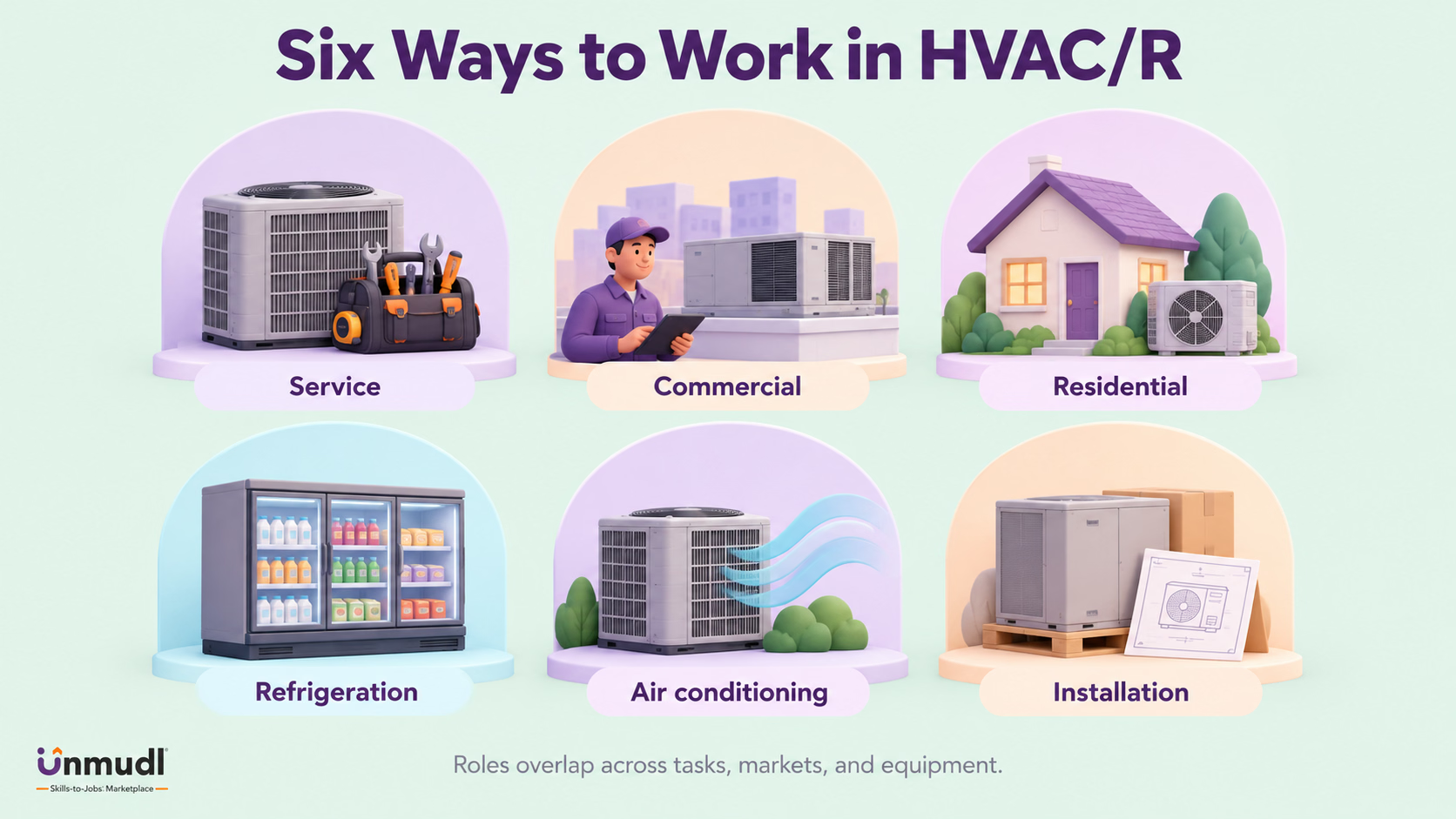
There are six main types of HVAC/R technicians, divided by task emphasis, customer market and equipment specialization. The types are the service technician, the commercial HVAC technician, the residential HVAC technician, the refrigeration technician, the air-conditioning technician and the HVAC installer. Helper, mechanic and HVAC electrician are a level, a title and an assignment rather than further types.
1. Service Technician
An HVAC service technician is a repair-focused worker who maintains, diagnoses and restores equipment that is already installed. Employers staff their call routes with service technicians because existing equipment generates the most calls.
2. Commercial HVAC Technician
A commercial HVAC technician is a building-systems worker who services rooftop units, large air handlers, hydronic equipment and controls in offices, schools and institutions. The commercial technician coordinates access and shutdowns with the facility, since a plant outage interrupts the building's operations. Employers assign commercial work by demonstrated competence on each machine, not by the job title alone.
3. Residential HVAC Technician
A residential HVAC technician is a home-service worker who handles household furnaces, heat pumps, split systems and the ducts that carry their air. Airflow, drainage and controls are checked before weak cooling is blamed on low refrigerant. Employers value residential staff for clear communication as much as for diagnosis.
4. Refrigeration Technician
A refrigeration technician is a product-temperature worker who maintains cold storage, display cases and process cooling rather than occupant comfort. The refrigeration technician identifies the system and its refrigerant before any work starts. Employers in food retail and cold logistics hire refrigeration staff for application-specific preparation.
5. Air-Conditioning Technician
An air-conditioning technician is a comfort-cooling worker who restores the electrical, air-delivery and refrigeration functions of cooling equipment. The air-conditioning technician reads several measurements together, since one reading in isolation misleads. AC technician and aircon technician are wording variants of the same role, not separate credentials. Employers in hot climates keep air-conditioning staff busiest through the peak season.
6. HVAC Installer
An HVAC installer is an equipment-fitting worker who positions new or replacement units, makes the connections and commissions the system. Commissioning verifies that the installed system performs as specified. Employers pair installers with service technicians so that new and existing systems receive the right hands.
The table below summarizes the six types.
Type | Market | Equipment | Core Task |
|---|---|---|---|
Service technician | Any site with installed units | Units already in place | Maintaining, diagnosing, restoring |
Commercial HVAC technician | Offices, schools, institutions | Rooftop and plant equipment with controls | Servicing inside a coordinated shutdown |
Residential HVAC technician | Single-family homes | Home heating and cooling units with ducts | Checking air, drainage and controls first |
Refrigeration technician | Food retail, cold logistics | Cold storage and process cooling | Holding product temperature |
Air-conditioning technician | Hot-climate comfort cooling | Cooling units and their circuits | Reading measurements together |
HVAC installer | New and replacement projects | Uncrated units and connections | Positioning, connecting, commissioning |
Shared instrument | All six markets | Electrical meters first | Reading the circuit before the refrigerant |
Reading the six types by market, task and equipment lets a learner match a job title to the work the title actually covers.
What are the Duties of an HVAC/R Technician?
There are six main duties in an HVAC technician job description, and there are four other duties that complete the ten. The main duties are installing equipment, inspecting and maintaining systems, troubleshooting faults, repairing components, handling refrigerant and testing electrical controls. The other four duties are servicing air distribution, commissioning performance, documenting work and following safety procedures. Each main duty pairs with a specific set of HVAC technician skills, which are briefly discussed below.
1. Installing and Replacing Equipment
Installation is the positioning, assembly and connection of specified equipment so that a system exists where none worked before. Measurement, drawing interpretation and mechanical assembly are its core skills. Supervisors sign off an installation on the commissioning record, not on the unit's first start.
2. Inspecting and Maintaining Systems
Maintenance is the scheduled examination and servicing of coils, filters, blowers, drains and moving parts before they fail. Observation and consistency are the skills it rewards. Supervisors read a completed checklist as the evidence that the visit happened.
3. Troubleshooting and Diagnosing Faults
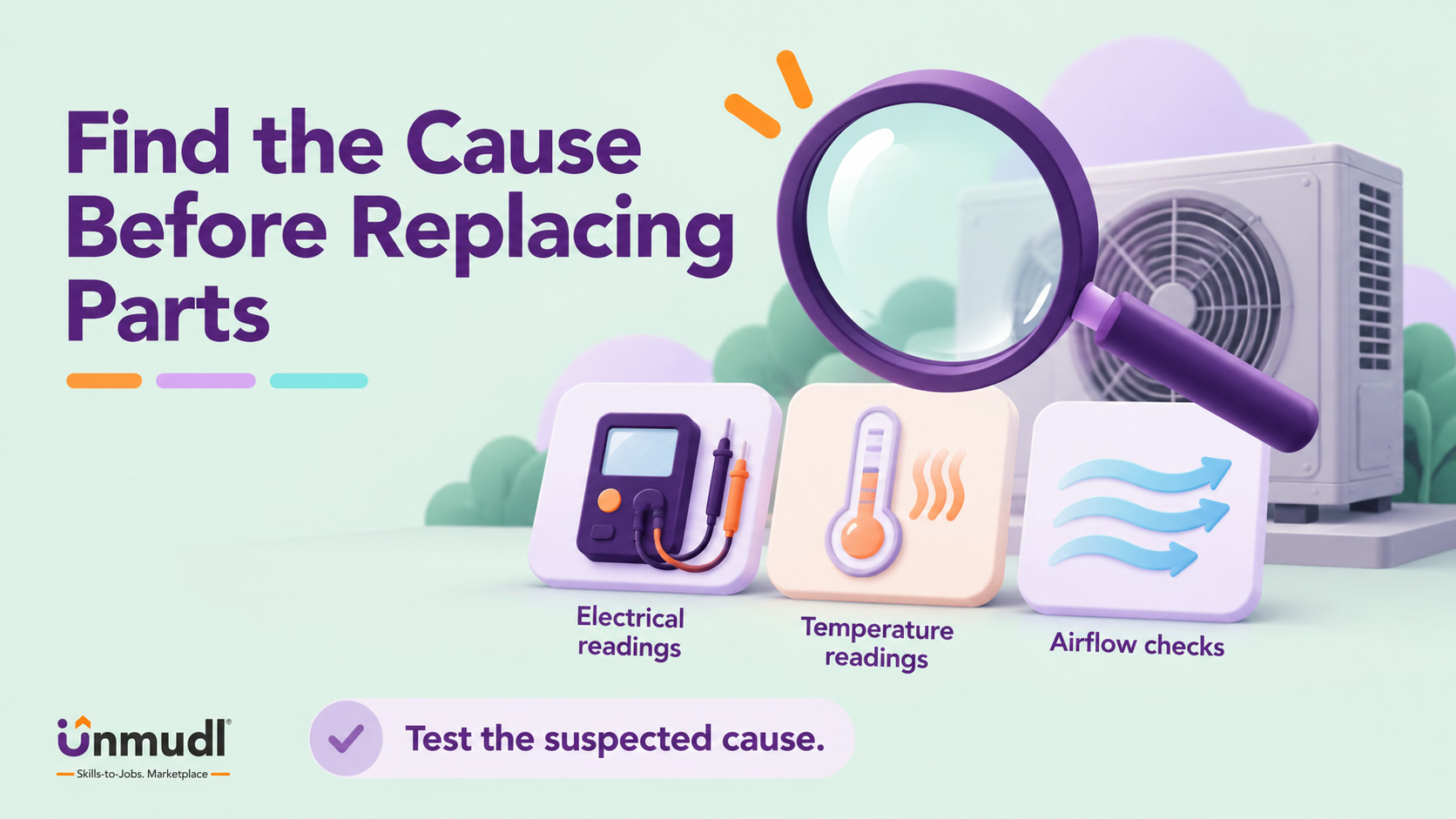
Diagnosis is the comparison of symptoms, measurements and operating sequences until one cause explains all of them. Reasoning and technical interpretation are the skills that matter most. A suspected cause is tested before a part is ordered. Supervisors judge diagnostic skill by how rarely a replaced part fails to clear the fault.
4. Repairing and Replacing Components
Repair is the correction of an authorized mechanical, wiring or control fault so that the equipment regains its intended function. Component identification and careful reassembly are the skills behind it. Supervisors treat a verified repair and a restarted unit as two different outcomes.
5. Handling Refrigerant and Leak Work
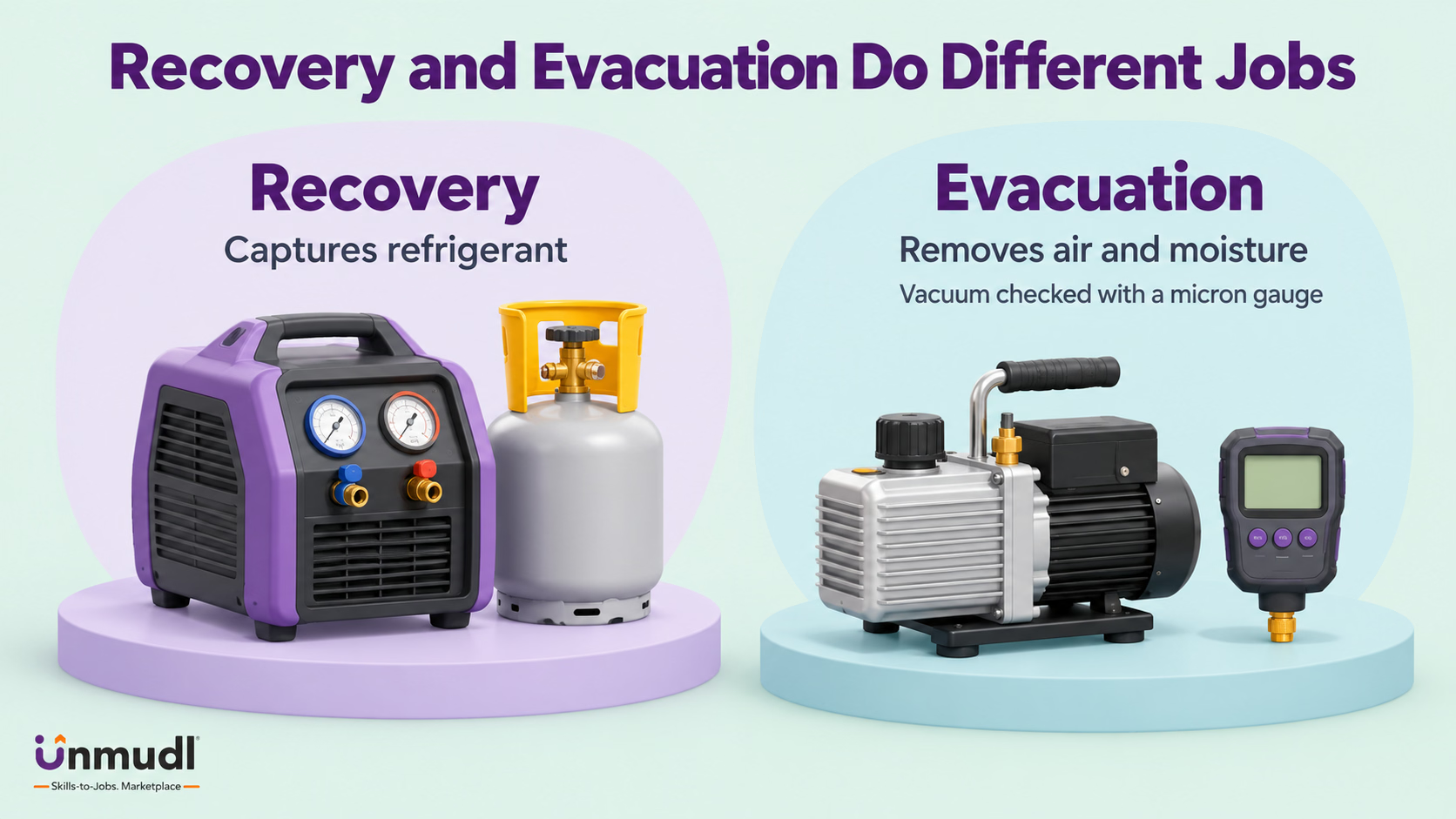
Refrigerant work is the recovery, leak investigation and charging of a sealed circuit within the limits of the technician's certification. Refrigerant work services the circuit without an avoidable release, and refrigerant identification and instrumentation are its skills. Supervisors require the federal refrigerant credential before assigning this duty.
6. Testing Electrical and Control Functions
Electrical testing is the checking of connections, sensors and operating sequences for the intended response. Electrical testing demands circuit interpretation and safe measurement as its skills. Supervisors keep the line between control testing and electrical contracting explicit on every job.
Pairing each duty with its skill shows a learner which abilities a job description is really asking for, and which employer is asking.
Where does an HVAC/R Technician work?
An HVAC worker is employed by an installation or service contractor, or by an organization that owns and maintains its own climate-control equipment. The worksites of HVAC employees include homes, offices, schools, hospitals, retail stores, food-refrigeration premises and industrial plants. Route-based work, on-call assignment and the equipment assigned to a new hire are the three questions a learner puts to an employer before accepting a post.