What is an Electro Mechanical Technician?
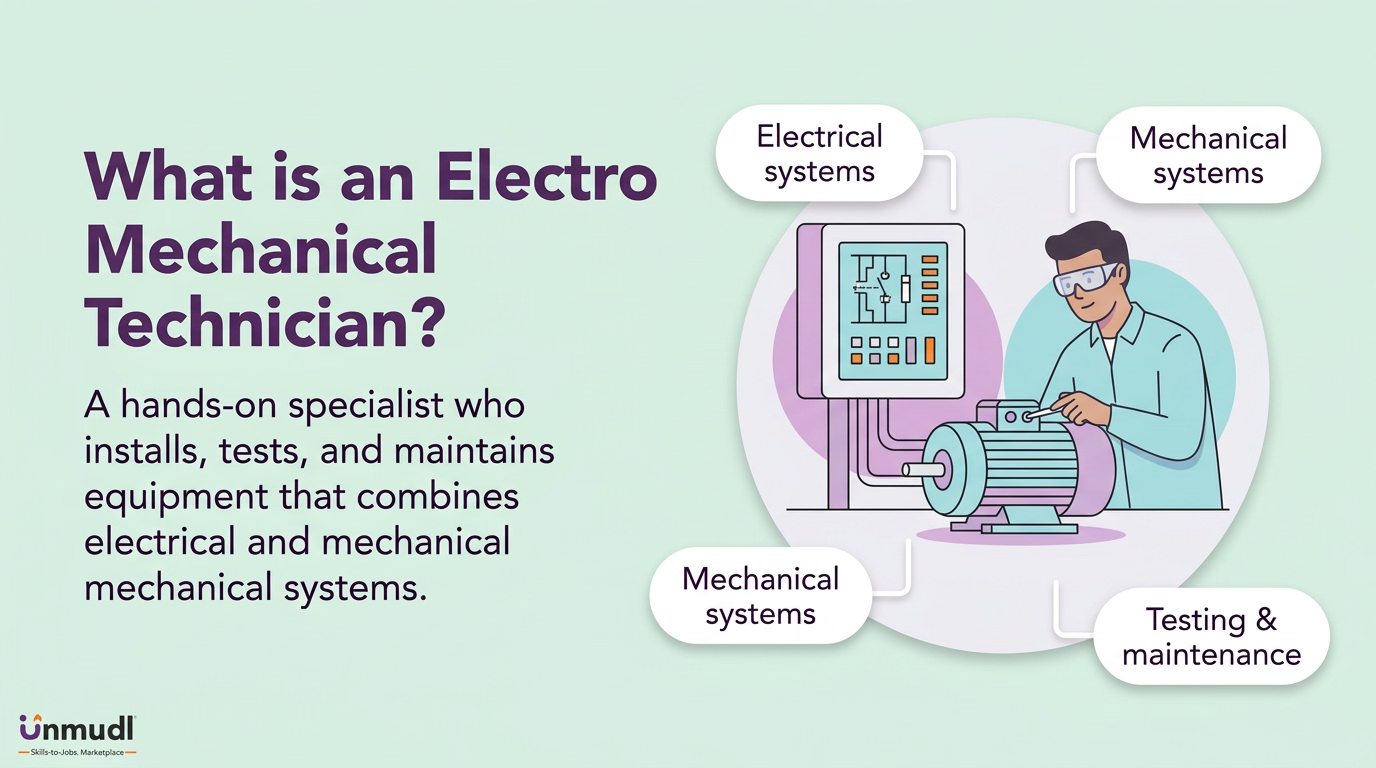
An electro mechanical technician is an engineering technician who operates, tests, maintains, and adjusts machinery that runs on both mechanical parts and electrical or electronic controls. The technician reads the machine as one system, so a jammed conveyor and a dead motor controller fall under the same worker. The single-system view separates the technician from an electrician, who owns the wiring, and from a millwright, who owns the mechanical drive. Electro-mechanical engineering is the academic discipline that designs such systems, and its graduates hold bachelor's degrees. Electro mechanical engineering technology is the educational program that prepares students for the technician role, and its graduates hold certificates or associate degrees. The technician therefore implements and troubleshoots the systems that the engineer designs.
The occupation is classified as a medium-preparation technical role, since entry requires one to two years of postsecondary training rather than a four-year degree. The U.S. Bureau of Labor Statistics (BLS) Occupational Outlook Handbook, in its May 2025 data, groups the role with mechatronics technologists under one occupation. BLS sets the typical entry education for that occupation at an associate's degree or a postsecondary certificate. What the technician does with that education is a fixed sequence of tasks.
What Does an Electro Mechanical Technician Do?
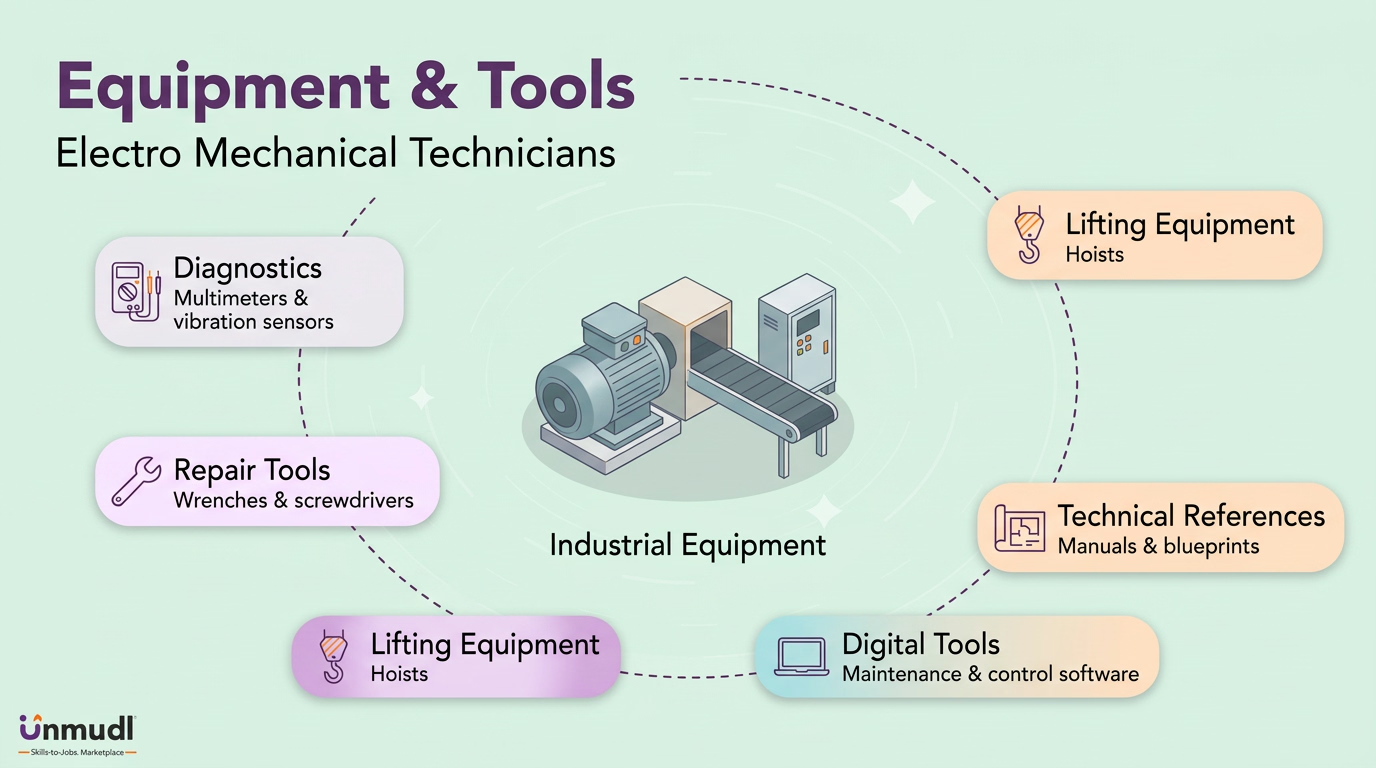
An electro mechanical technician tests, operates, and maintains automated electromechanical equipment so that it runs to specification. The work starts with a technical diagram, since the diagram shows how the mechanical assembly and the control circuit connect. The technician then uses an oscilloscope or a voltmeter to locate the point of failure. A located fault leads to a repair, a recalibration, or a part replacement, and a performance test closes the job. An electromechanical engineering technician in robotics diagnoses a misaligned robotic arm by checking its sensor, its actuator, and its control board against the reference schematic. The engineer who designed the arm plays no part in that repair, because design and upkeep are two separate occupations. The upkeep itself splits into types by the stage of equipment that the worker owns.
What are the Types of Electro Mechanical Technician?
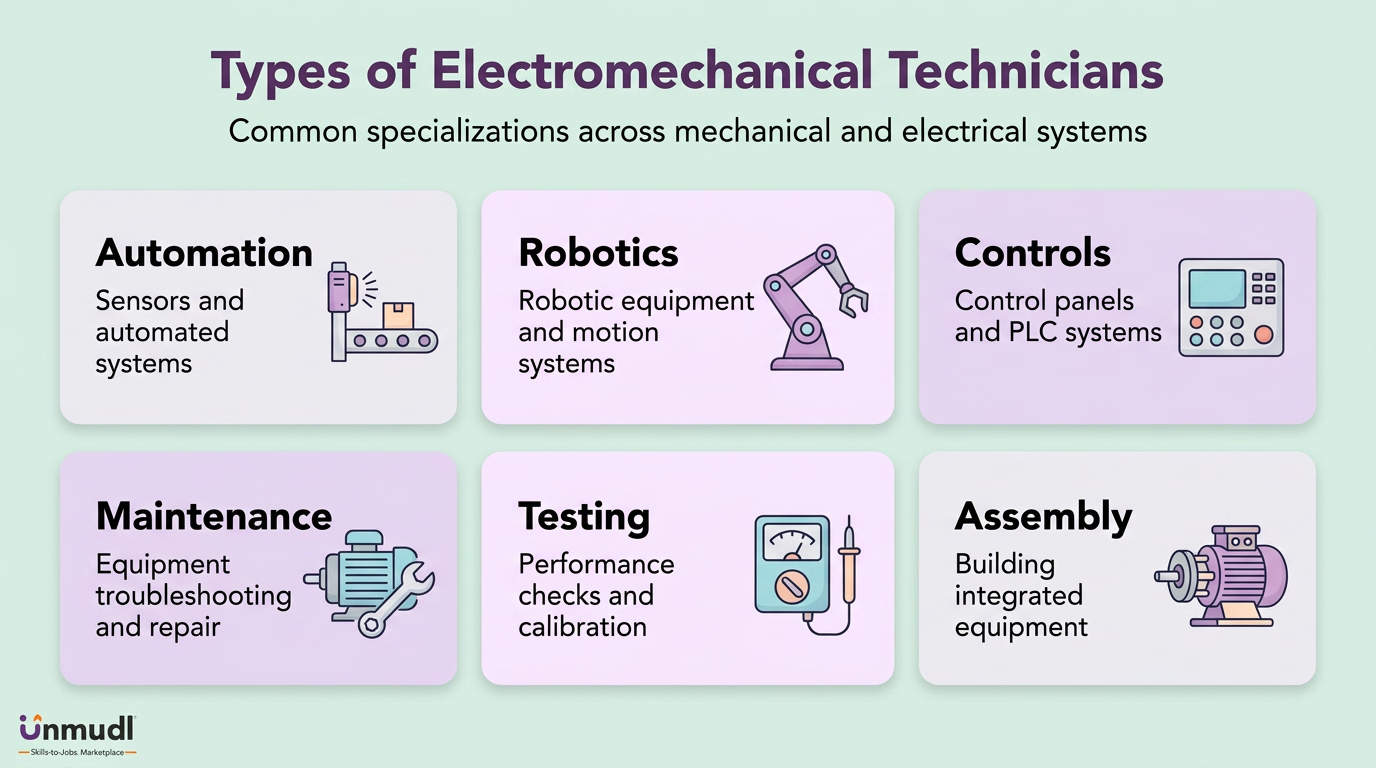
There are six main types of electro mechanical technician based on the stage of the equipment life cycle that the worker owns. The types are the electromechanical maintenance technician, the electromechanical assembly technician, the electromechanical test technician, the electromechanical PLC technician, the electromechanical field service technician, and the electromechanical and robotics technician.
1. Electromechanical Maintenance Technician
An electromechanical maintenance technician is the type that keeps installed machinery in working order. The maintenance work runs on a schedule of inspections, lubrication, and part replacement before a breakdown occurs. Scheduled upkeep protects a plant from unplanned stoppages. A maintenance technician learns the failure history of every machine on the floor. Employers place this type on rotating shifts.
2. Electromechanical Assembly Technician
An electromechanical assembly technician is the specialist who builds machinery from drawings and parts lists. Assembly work joins motors, gears, wiring harnesses, and sensors into a finished unit that has not yet run. The finished unit passes to testing only after every connection matches the drawing. Employers staff this type in plants that build automation equipment.
3. Electromechanical Test Technician
An electromechanical test technician is the role that proves a built assembly performs to its specification. Testing applies measured loads, voltages, and cycles to the unit and records the response. Recorded responses reveal a weak solder joint or a drifting sensor before the unit reaches a customer. Employers assign this type to quality departments.
4. Electromechanical PLC Technician
An electromechanical PLC technician is the worker who services the programmable logic controller (PLC) that sequences a machine's movements. The PLC reads sensor inputs and switches motors and valves according to a stored program. A PLC technician loads, edits, and backs up control programs through a laptop interface. Employers value this type wherever automated lines run.
5. Electromechanical Field Service Technician
An electromechanical field service technician is the category that installs and repairs equipment at the customer's site. Field service starts when a machine leaves the maker's plant and continues through its working life. A site visit compresses diagnosis, repair, and operator training into one trip. Employers hire this type at equipment makers that support installed machines.
6. Electromechanical and Robotics Technician
An electromechanical and robotics technician is the specialty that operates and maintains robot cells and other unmanned equipment. A robot cell couples an articulated arm with position sensors, servo drives, and a controller. Cell upkeep centers on calibrating the sensors so that the arm repeats each position exactly. Employers concentrate this type in automotive and electronics plants.
The table below compares the six types by the equipment stage each one owns, the core task it performs, and the employer that hires it.
| Type | Equipment Stage Owned | Core Task | Typical Employer |
|---|---|---|---|
| Maintenance Technician | Installed machinery in working order | Inspecting, lubricating, and replacing parts on a schedule | Plants that run rotating shifts |
| Assembly Technician | Machinery built from drawings, not yet run | Joining motors, gears, harnesses, and sensors into a unit | Plants that build automation equipment |
| Test Technician | Built assembly before it reaches a customer | Applying measured loads, voltages, and cycles to the unit | Quality departments |
| PLC Technician | The controller that sequences a machine's movements | Loading, editing, and backing up control programs | Sites where automated lines run |
| Field Service Technician | Equipment installed at the customer's site | Installing, repairing, and training operators in one trip | Equipment makers that support installed machines |
| Robotics Technician | Robot cells and other unmanned equipment | Calibrating sensors so the arm repeats each position | Automotive and electronics plants |
Reading the six types by equipment stage lets a candidate choose the machinery they will own, and every type performs the same core duties.
What are the Duties of Electro Mechanical Technician?
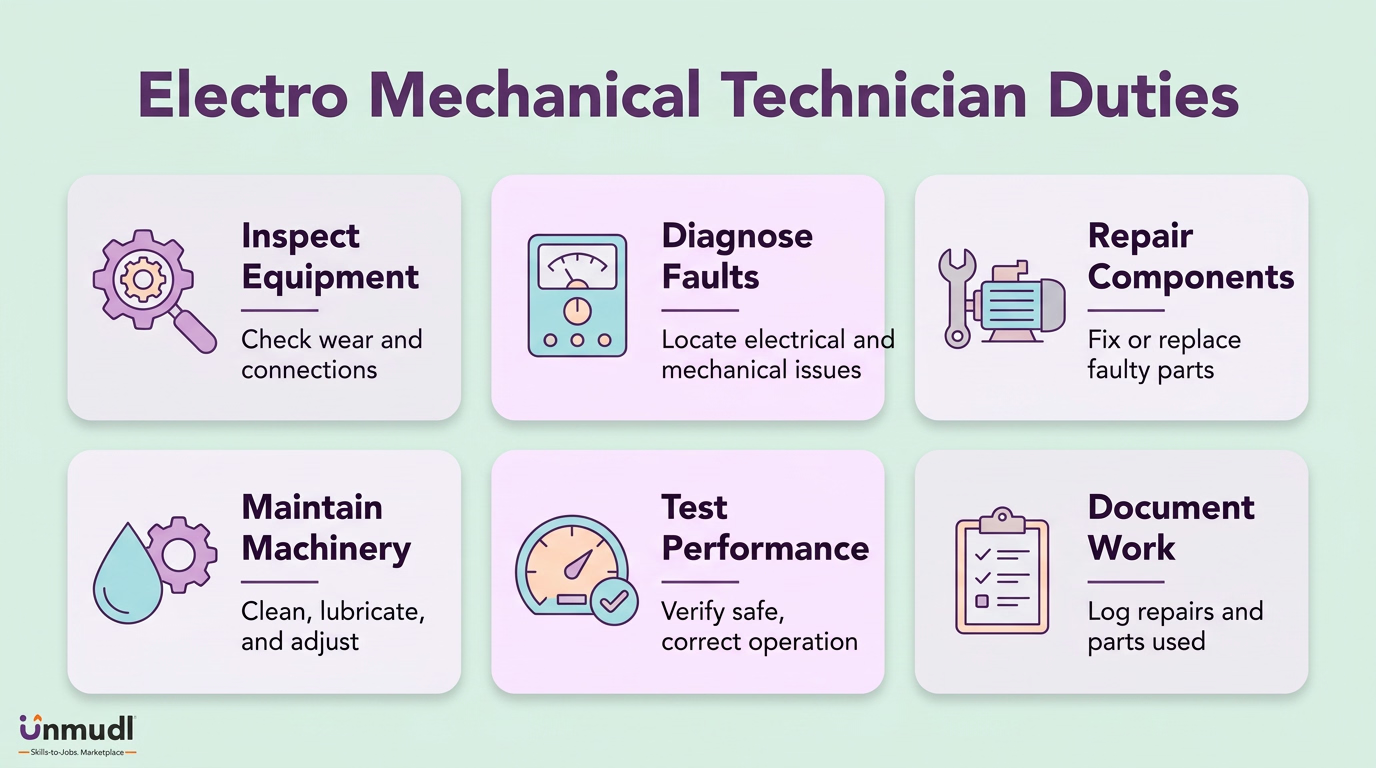
There are six main duties of an electro mechanical technician. The duties are reading blueprints and schematics, testing electromechanical assemblies, installing and programming hardware, inspecting parts for defects, repairing and calibrating assemblies, and operating automated equipment. Every electromechanical technician job description draws its task list from these six.
1. Reading Blueprints and Schematics
Reading blueprints and schematics is the duty that turns an engineer's drawing into a plan of work. A blueprint fixes the mechanical dimensions, and a schematic fixes the electrical connections of the same machine. The technician reads both before touching a part, so that every adjustment respects the design. Supervisors treat drawing literacy as the entry test of the trade.
2. Testing Electromechanical Assemblies
Testing electromechanical assemblies is the task that verifies a unit performs as specified. The test connects multimeters and oscilloscopes to the unit and compares the readings with the specification sheet. Testing repeats after every repair, since a repair that passes no test remains unproven. Supervisors log the test results as the record of the machine's condition.
3. Installing and Programming Hardware
Installing and programming hardware is the responsibility that puts new controllers, sensors, and drives into service. Installation mounts and wires the device, and programming gives it the parameters that match the machine. A drive installed without its parameters runs the motor at the wrong speed, so the two halves never separate. Supervisors sign off the installation after the trial run passes.
4. Inspecting Parts for Defects
Inspecting parts for defects is the work that catches a flaw before it causes a failure. The inspection compares each part with its drawing for dimensions, surface condition, and wear. A worn bearing or a cracked insulator found during inspection is replaced during planned downtime rather than during a breakdown. Supervisors schedule inspections from the maintenance calendar.
5. Repairing and Calibrating Assemblies
Repairing and calibrating assemblies is the job that returns a faulty unit to its specified performance. A repair replaces or rebuilds the failed component, and a calibration resets the assembly so that its output matches the reference value. Calibration follows repair, because a replaced part alters the alignment of the whole assembly. Supervisors require calibration records for every repaired machine.
6. Operating Automated Equipment
Operating automated equipment is the function that keeps a running machine within its normal range. The operator watches gauges, displays, and indicator lights for a drift that signals a developing fault. An early drift prompts an adjustment before the machine stops. Supervisors rotate technicians through operation so that each one knows the machine's normal behavior.
Carrying out the six duties in sequence keeps automated machinery within specification, and the machinery sets the places where the work happens.
Where does an Electro Mechanical Technician Work?
An electro mechanical technician works mainly in manufacturing plants where automated machinery runs. The four largest employer groups are engineering services firms, machinery manufacturers, computer and electronic product manufacturers, and scientific research and development laboratories. Electromechanical technician factory positions place the worker on the production floor beside the machines, while laboratory and office hours cover data analysis and report writing. Factory work follows shift schedules, since a plant that runs around the clock needs cover around the clock. Safety procedures govern the floor, because the machines combine high voltage with moving parts. The workplace also sets the training that each employer expects before hiring.